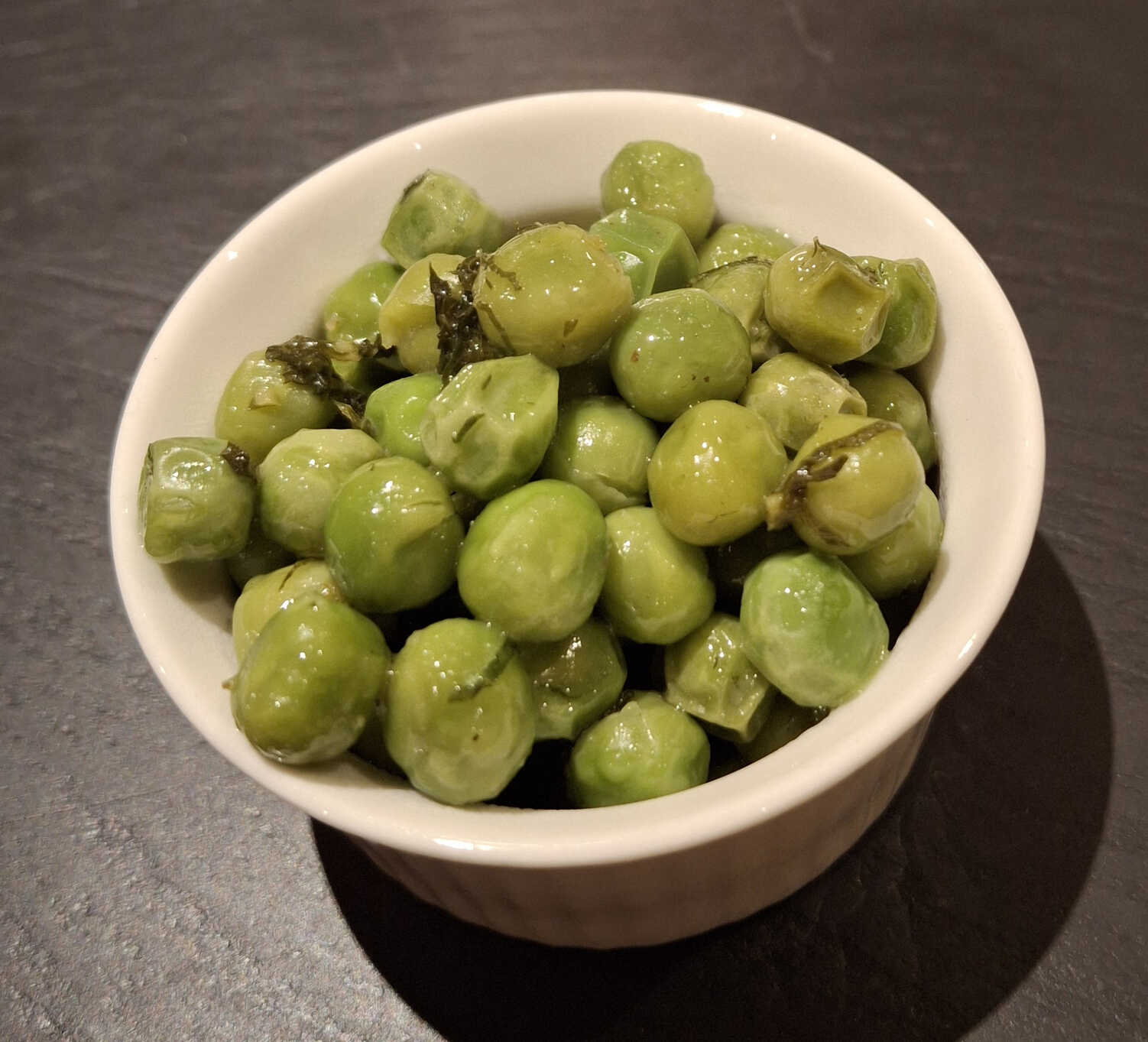
Introduction to Bistro Cookery - Taster - Chump at the Chance
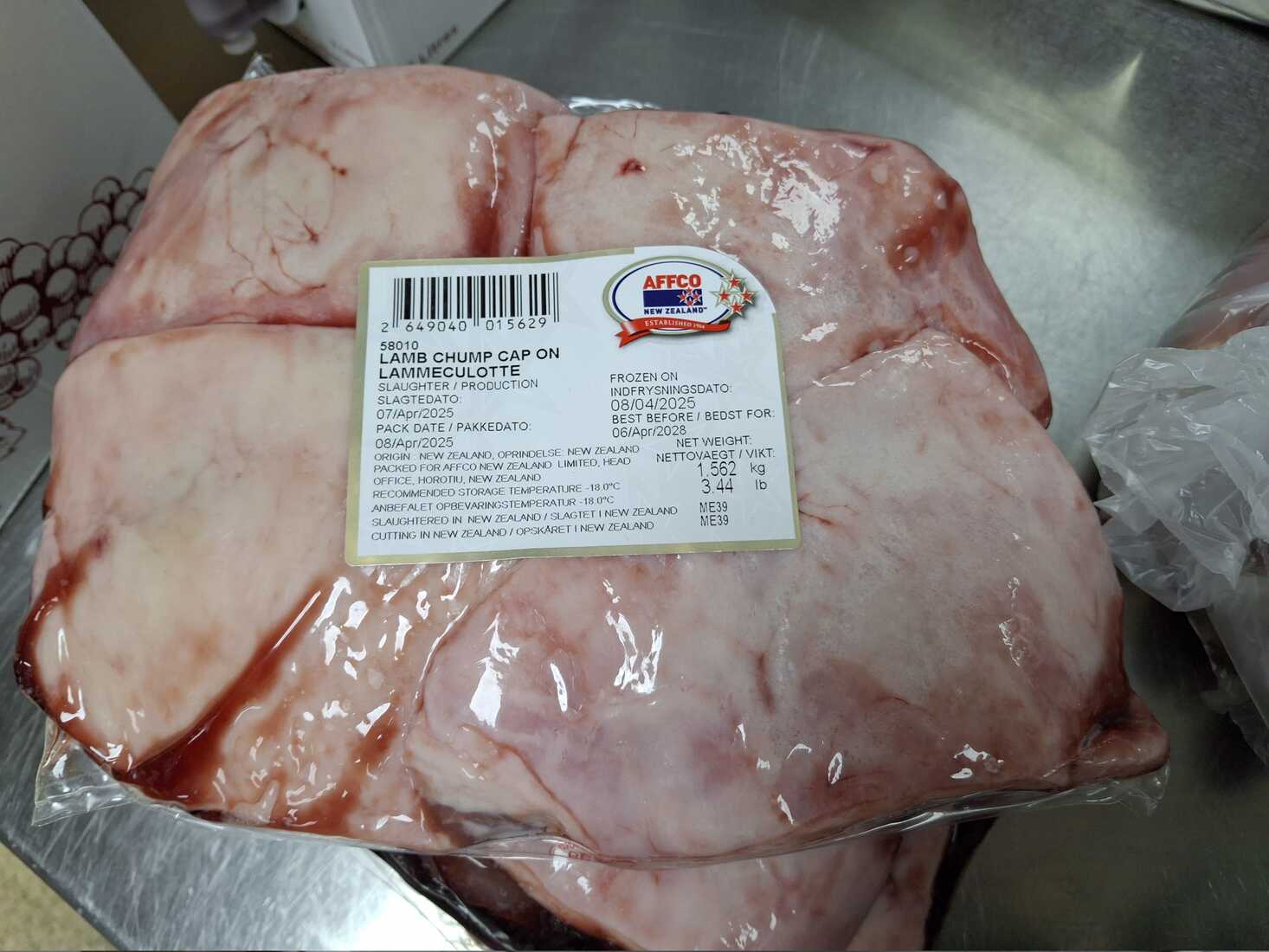
Chump is to lamb as rump is to beef, which is the cut between the lower ribs and the buttocks.
Accordingly it is a lean, boneless cut, usually less tender than loin, but more so than leg.
Generally a good value cut, it can be found divided into chops or as small roasting joints. It is well suited to quick cooking, and is best served raw and bleeding, er, I mean pink.
Today we are cooking a complete lamb chump meal with fondant potatoes and peas, such as you might find served in a high-end Bistro.
Here was our order of business:
The U.K. however charges tax on all drinks with more than 1.3% alcohol content no matter how disgusting they taste. So cooking wine in the UK is just low-quality regular wine, or one to which unpleasant additives have been added to extend its life after opening.
Our class had boxes of low-alcohol wine, but I suspect this was to allow teetotallers to use it in their cookery, or to prevent us from enjoying it! rather than because it had been deliberately reduced to avoid taxes.
I suspect Teacher Paul was confused on this issue.
Accordingly it is a lean, boneless cut, usually less tender than loin, but more so than leg.
Generally a good value cut, it can be found divided into chops or as small roasting joints. It is well suited to quick cooking, and is best served raw and bleeding, er, I mean pink.
Today we are cooking a complete lamb chump meal with fondant potatoes and peas, such as you might find served in a high-end Bistro.
Here was our order of business:
- Set the plates to warm(!)
- Cook the fondants in stock.
- Make up and reduce the minted jus sauce.
- Par-cook the peas. Though we mistakenly did this earlier. In fact it would have been best to cook them while the meat is resting, since they only take a few minutes.
- Fry the chump joint then set aside to rest.
- Glaze the fondants in butter
- Reheat the jus, add mint, skim fat from the lamb juices and add to the jus.
- Heat butter and swirl through the peas.
- Slice the lamb thinly and plate with golden fondants, vibrant peas, and a drizzle of minty jus.
- Wipe off the plate where you've dribbled butter and sauce.
- Serve the hot, clean plate with your junk on it.
- When cooking many green vegetables you need only the barest amount of water. By using any more you're losing nutrients.
For frozen peas add just enough to cover the base of the pan.
Teacher Paul also recommends cooking them from frozen in the microwave covered with a screwed up piece of wetted kitchen roll, or cling film, to keep the steam in. - Peas are harvested in the cool of the early morning, when the pods are crisp and sweetest.
The frozen ones labelled petit pois are the smallest, youngest, sweetest peas and barely need cooking at all.
Our frozen peas were labelled Choice and were thick and tough like knotwood and required a good 5 minutes of cooking to soften them up.
Add sugar. Peas like sugar. - British spring lamb is at its best in autumn through to early January. Paradoxically.
- New Zealand lamb tends to have more consistent quality and price than native lamb, though their best will never rival ours. At least, not after it's been shipped half-way around the world frozen solid or sealed in a gas bag!
- Don't drink the spoiled wine!
- Teacher Paul likes to add his de-glazing alcohol off the heat to avoid the smoke and splatter. It seems he is unusually attached to his eyebrows. Pussy!
- Skim sauces for clarity or shinyness.
- Because a thick joint like chump consists of multiple layers of different muscles, you will need to use a very sharp, or serrated, knife to slice it for serving or the layers will pull apart.
- Teacher Paul demonstrated how to determine the doneness of a lamb joint by feel using various parts of his thumb for comparison. If you don't happen to have access to Paul's thumb, though, I recommend you use a temperature probe.
The U.K. however charges tax on all drinks with more than 1.3% alcohol content no matter how disgusting they taste. So cooking wine in the UK is just low-quality regular wine, or one to which unpleasant additives have been added to extend its life after opening.
Our class had boxes of low-alcohol wine, but I suspect this was to allow teetotallers to use it in their cookery, or to prevent us from enjoying it! rather than because it had been deliberately reduced to avoid taxes.
I suspect Teacher Paul was confused on this issue.
menu
Chump Change
Lamb Chump with Minted Jus
Lamb Chump with Minted Jus
The main event.
Fondant Potatoes
A cookery course staple.
Peas au Beurre
Lamb and peas is a classic combo!
Lamb Chump with Minted Jus
class main meat
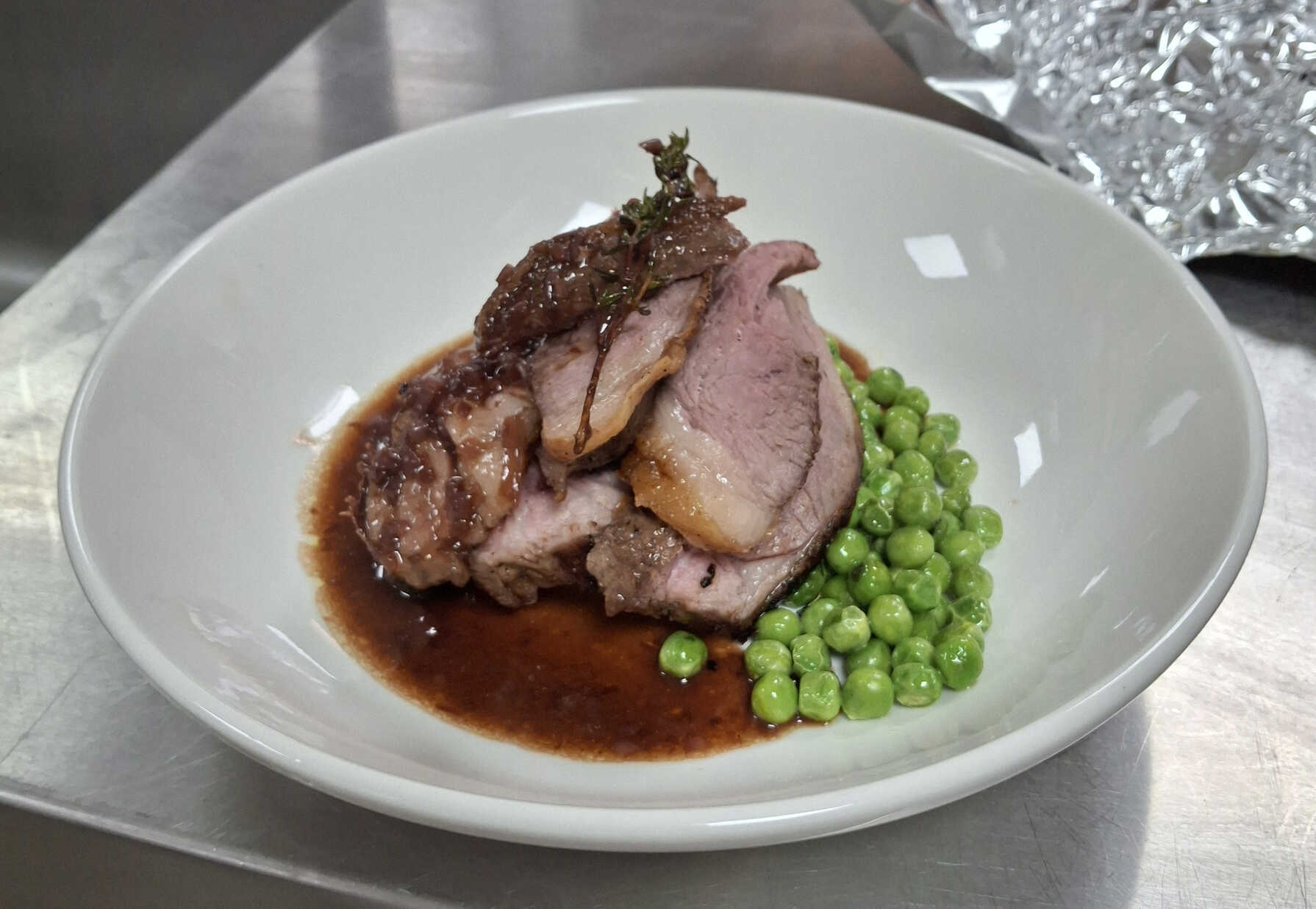
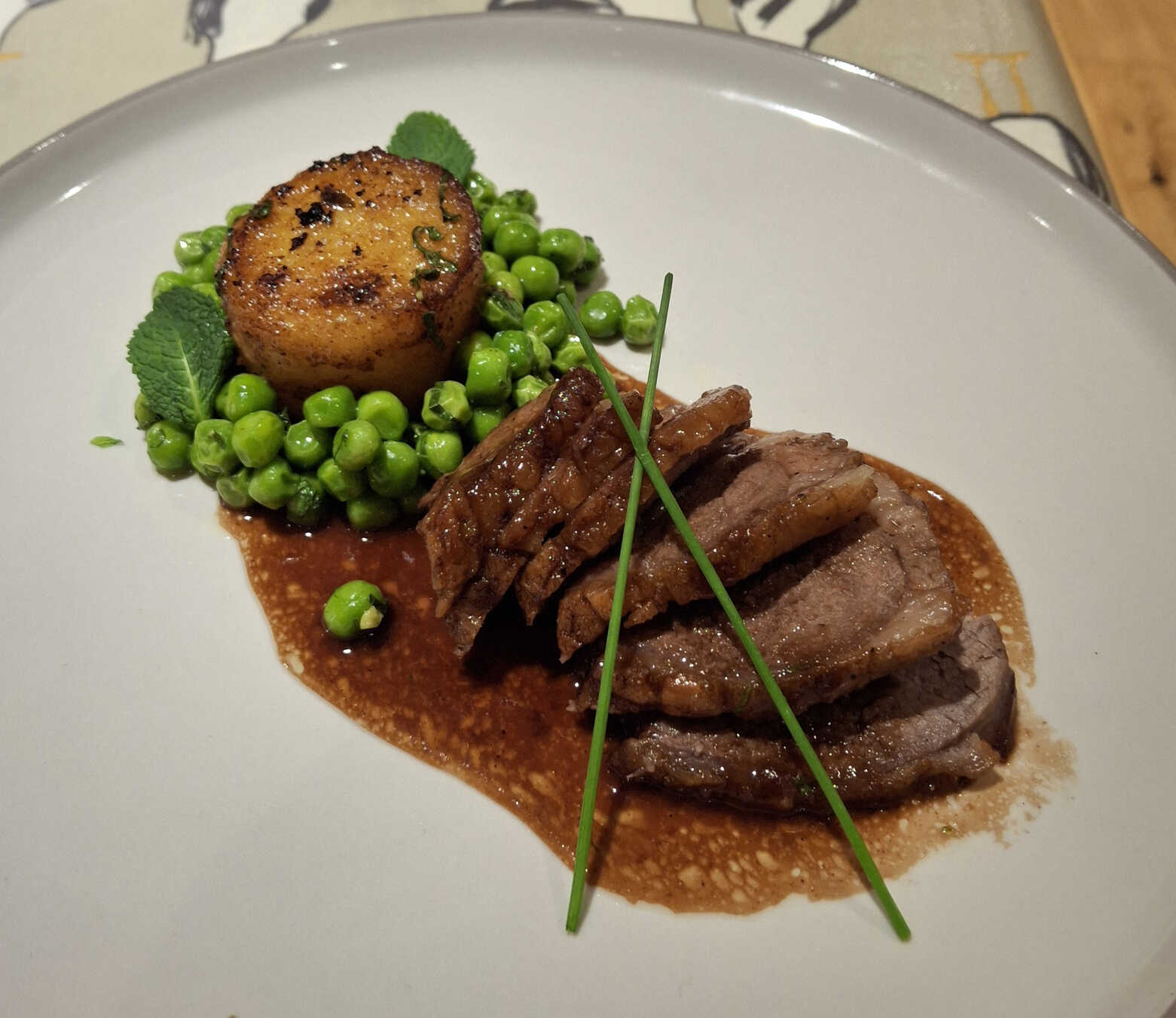
You can make the sauce in the pan you used to cook the lamb, while it's resting or you can make it up first, as we did - just remember to add in the delicious pan juices afterwards!
Although you can, to some degree, tell how well done the lamb is by feel, there's a lot of experience required in doing that accurately and different cuts of meat will respond differently so personally I'd suggest using a temperature probe.
Lamb will be rare at around 49°C, medium rare ate 54°C, medium at 60°c and overdone, er, I mean medium done, at 65°C. Roughly speaking.
Test the temperature right in the centre and not touching any bone, (not a problem in this case though - chump joints are boneless) and remember that if the outside is much hotter then the middle will continue to heat up by as much as 5°C as it rests, so you might want to stop the cooking a few degrees below your target temperature.
Although you can, to some degree, tell how well done the lamb is by feel, there's a lot of experience required in doing that accurately and different cuts of meat will respond differently so personally I'd suggest using a temperature probe.
Lamb will be rare at around 49°C, medium rare ate 54°C, medium at 60°c and overdone, er, I mean medium done, at 65°C. Roughly speaking.
Test the temperature right in the centre and not touching any bone, (not a problem in this case though - chump joints are boneless) and remember that if the outside is much hotter then the middle will continue to heat up by as much as 5°C as it rests, so you might want to stop the cooking a few degrees below your target temperature.
Serves 2
Ingredients
- 12oz lamb chump joint
- oil or clarified butter
- drizzle of honey optional
For the Jus:- half a shallot, minced
- 1 clove garlic, puréed
- butter
- glass or two of red wine
- couple tablespoons redcurrant jelly
- lamb stock
- sprigs of mint
Dry your joint if its been sitting in a vacuum sack of blood.
Trim the lamb chump so the joint is neat and tidy, and peel off the papery skin. You probably won't be able to just pull it off, so you'll have to run a sharp knife under the skin as you lift it away.
You could also shave down the fatty cap, if you don't like it. Though I'd be then tempted to ask why you're eating a lamb joint in the first place?
Score the fat in a criss cross pattern to help with the crisping, then rub salt and pepper all over the joint.
Heat a little oil or clarified butter in a frying pan over moderate flame and place the joint in fat-side down. Let it render gently until nice and golden, then turn the lamb to colour all its sides.
With the lamb fatty-side up, add a knob of butter to the pan along with some crushed garlic cloves and a bunch of thyme and baste the joint like a lunatic.
You now have a choice - to cook the lamb all the way in the pan, in which case you'll need to keep the heat pretty low to avoid burning the outside before it's cooked all the way through since the chump is a fairly thick joint, or putting the pan in a 180°C (convection) oven for about 5 minutes.
When the meat is cooked to your taste, cover the joint lightly in foil and leave fat-side-up to rest for 15 minutes.
Now or earlier! make up the minty jus:
Spoon away any excess fat from the frying pan or add a little butter to a fresh one and sweat minced shallots and crushed garlic until softened and glassy.
Add a glass or two of red wine, a tablespoon or two of redcurrant jelly and bubble off until you're left with only a shallow, glossy, puddle.
Add a cup or two of stock lamb would be appropriate! and simmer gently until it thickens slightly.
Keep warm until required, stirring in a bunch of mint leaves and adjusting the seasoning before serving.
Slice the rested lamb thinly using a very sharp or serrated knife. Don't forget to add the resting juices to your sauce! Serve dressed with the minted jus.
Trim the lamb chump so the joint is neat and tidy, and peel off the papery skin. You probably won't be able to just pull it off, so you'll have to run a sharp knife under the skin as you lift it away.
You could also shave down the fatty cap, if you don't like it. Though I'd be then tempted to ask why you're eating a lamb joint in the first place?
Score the fat in a criss cross pattern to help with the crisping, then rub salt and pepper all over the joint.
Heat a little oil or clarified butter in a frying pan over moderate flame and place the joint in fat-side down. Let it render gently until nice and golden, then turn the lamb to colour all its sides.
With the lamb fatty-side up, add a knob of butter to the pan along with some crushed garlic cloves and a bunch of thyme and baste the joint like a lunatic.
You now have a choice - to cook the lamb all the way in the pan, in which case you'll need to keep the heat pretty low to avoid burning the outside before it's cooked all the way through since the chump is a fairly thick joint, or putting the pan in a 180°C (convection) oven for about 5 minutes.
When the meat is cooked to your taste, cover the joint lightly in foil and leave fat-side-up to rest for 15 minutes.
You can drizzle honey, flecked with dried red chilli flakes too if you like, over the fatty cap at this stage, to produce a sweeter crust.
Now or earlier! make up the minty jus:
Spoon away any excess fat from the frying pan or add a little butter to a fresh one and sweat minced shallots and crushed garlic until softened and glassy.
Add a glass or two of red wine, a tablespoon or two of redcurrant jelly and bubble off until you're left with only a shallow, glossy, puddle.
Add a cup or two of stock lamb would be appropriate! and simmer gently until it thickens slightly.
Keep warm until required, stirring in a bunch of mint leaves and adjusting the seasoning before serving.
You can scoop off any scum or excess fat from the sauce as it cooks to keep the result shiny.
The mint is best added towards the end to retain its fresh flavour and colour. You can slice the leaves, or throw in the sprigs whole and strain them out when pouring the sauce.
For extra glossiness, whisk in a little butter or beurre manié before serving.
The mint is best added towards the end to retain its fresh flavour and colour. You can slice the leaves, or throw in the sprigs whole and strain them out when pouring the sauce.
For extra glossiness, whisk in a little butter or beurre manié before serving.
Slice the rested lamb thinly using a very sharp or serrated knife. Don't forget to add the resting juices to your sauce! Serve dressed with the minted jus.
Peas au Beurre
class veg side
You can eroticise peas (or do I mean exoticise?) by adding other vegetables to them:
- Petits pois à la française - French peas with lettuce (often braised), bacon, and tiny pearl onions.
- Peas jardinière - Garden peas with tiny or julienned carrots
- Petits pois à la flamande - Flemish peas with glazed carrots
- Vignarola - A Roman stew of peas, broad beans and artichokes.
- Piselli e Funghi - A classic Italian dish of pan-fried mushrooms and peas, often with cheese or cream.
Ingredients
- frozen peas
- salt
- sugar or honey
- ground pepper
- butter
Optional Finishes:- mint or other herbs such as basil, parsley, or thyme
- lemon juice or zest
- grated parmesan
- spices - cumin, coriander, garam masala
- other vegetables
Put your peas in a small pan and add just the smallest splash of water or stock - just to cover the bottom of the pan.
Season with a pinch of salt, pepper and sugar. Peas like sugar!
Set the pan on a medium heat and let them steam for 2-5 minutes, depending on the peas, until they are tender. Give them an occasional shake.
Set the pan on a medium heat and let them steam for 2-5 minutes, depending on the peas, until they are tender. Give them an occasional shake.
You can set them aside until needed at this stage.
When ready to eat, melt a generous knob of butter and swirl through the peas, along with any herbs or flavourings you fancy, to coat until glossy.
These are especially nice if you pickle some mint leaves in a puddle of good vinegar for a few minutes before mincing them into the butter you're adding at the end.
Probably best if you're not also serving them with a minted jus though.
Fondant Potatoes
class side veg staple
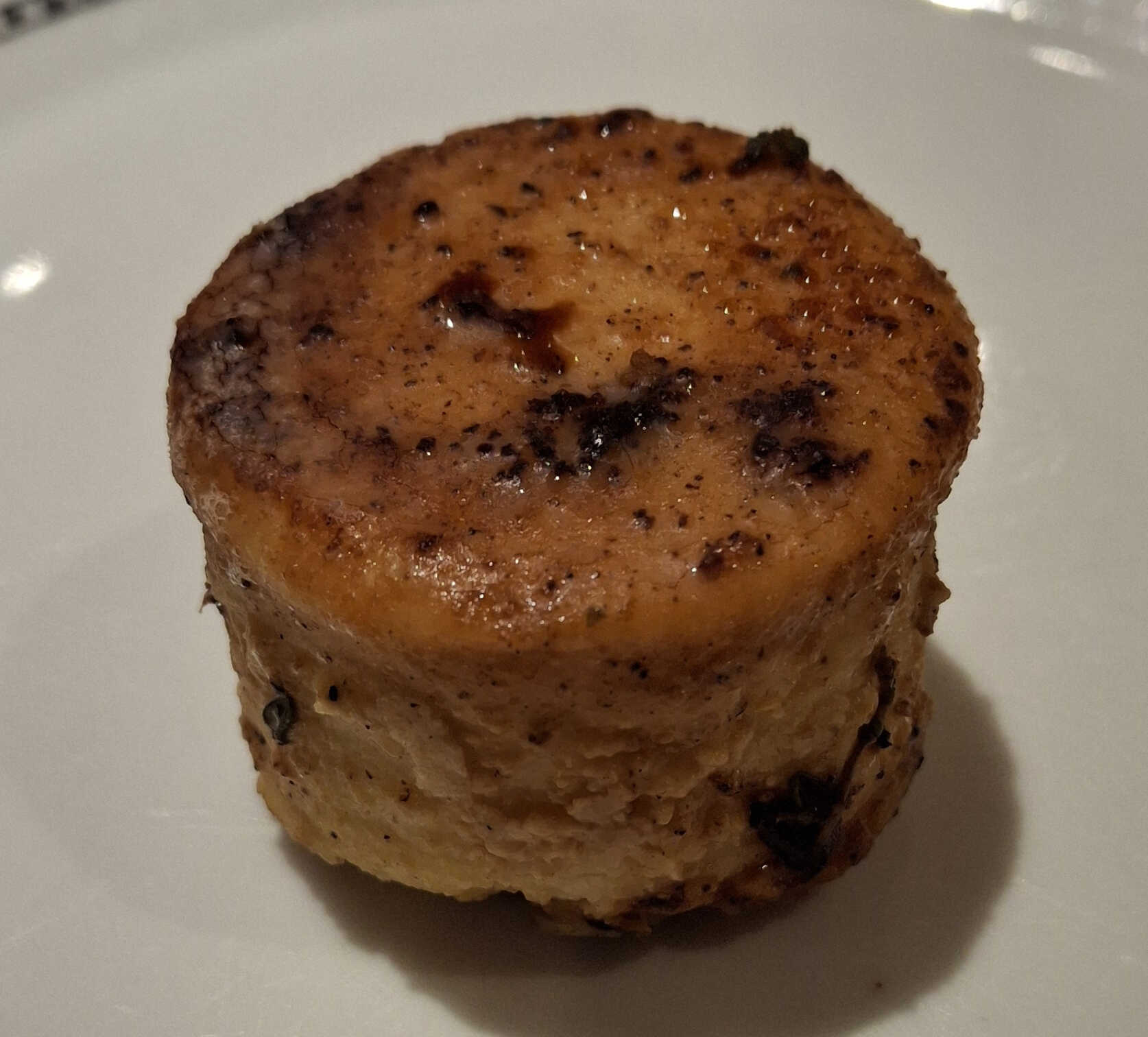
Fondant potatoes. AGAIN!
These cookery school chefs do love their fondant potatoes. And they are quite special I must admit.
As I have previously observed there are substantially two approaches to cooking fondants - brown them first, or brown them later.
Here we cook first, then brown later. It's probably an easier way for a restaurant to serve fondants on demand - parcook an enormous batch, then finish them off individually as required. However, I personally get better results from browning first.
You pays your money...
These cookery school chefs do love their fondant potatoes. And they are quite special I must admit.
As I have previously observed there are substantially two approaches to cooking fondants - brown them first, or brown them later.
Here we cook first, then brown later. It's probably an easier way for a restaurant to serve fondants on demand - parcook an enormous batch, then finish them off individually as required. However, I personally get better results from browning first.
You pays your money...
Serves One per Fondant
Ingredients
- potatoes
- butter
- garlic
- woody herbs, like thyme
- stock
- salt & pepper
Carve your potatoes into cylinders or barrels. This is easiest if you have a sturdy pastry cutter 😉
Sit them in a single layer in a fairly snug pan and cover with stock. Season aggressively, add additional flavourings like garlic and herbs if you like and set to simmer gently until the potatoes are cooked through, but not collapsing. 10-20 minutes. A knife should penetrate easily.
Lift them out carefully using a palette knife and set aside on a tray.
About 10 minutes before serving, while the joint is resting for example, heat a generous quantity of butter or better yet, clarified butter in a frying pan over moderate heat, add herbs and crushed garlic and gently add in the fondants. Glaze the ends so they're golden, carefully turning the fondants as required, and basting occasionally so they're fully heated back through.
Sit them in a single layer in a fairly snug pan and cover with stock. Season aggressively, add additional flavourings like garlic and herbs if you like and set to simmer gently until the potatoes are cooked through, but not collapsing. 10-20 minutes. A knife should penetrate easily.
Lift them out carefully using a palette knife and set aside on a tray.
About 10 minutes before serving, while the joint is resting for example, heat a generous quantity of butter or better yet, clarified butter in a frying pan over moderate heat, add herbs and crushed garlic and gently add in the fondants. Glaze the ends so they're golden, carefully turning the fondants as required, and basting occasionally so they're fully heated back through.
Be careful towards the end - though the fondants will firm up when cool, its easy to break them up when removing them from the pan.