Introduction to Bistro Cookery - Rustic Pasta
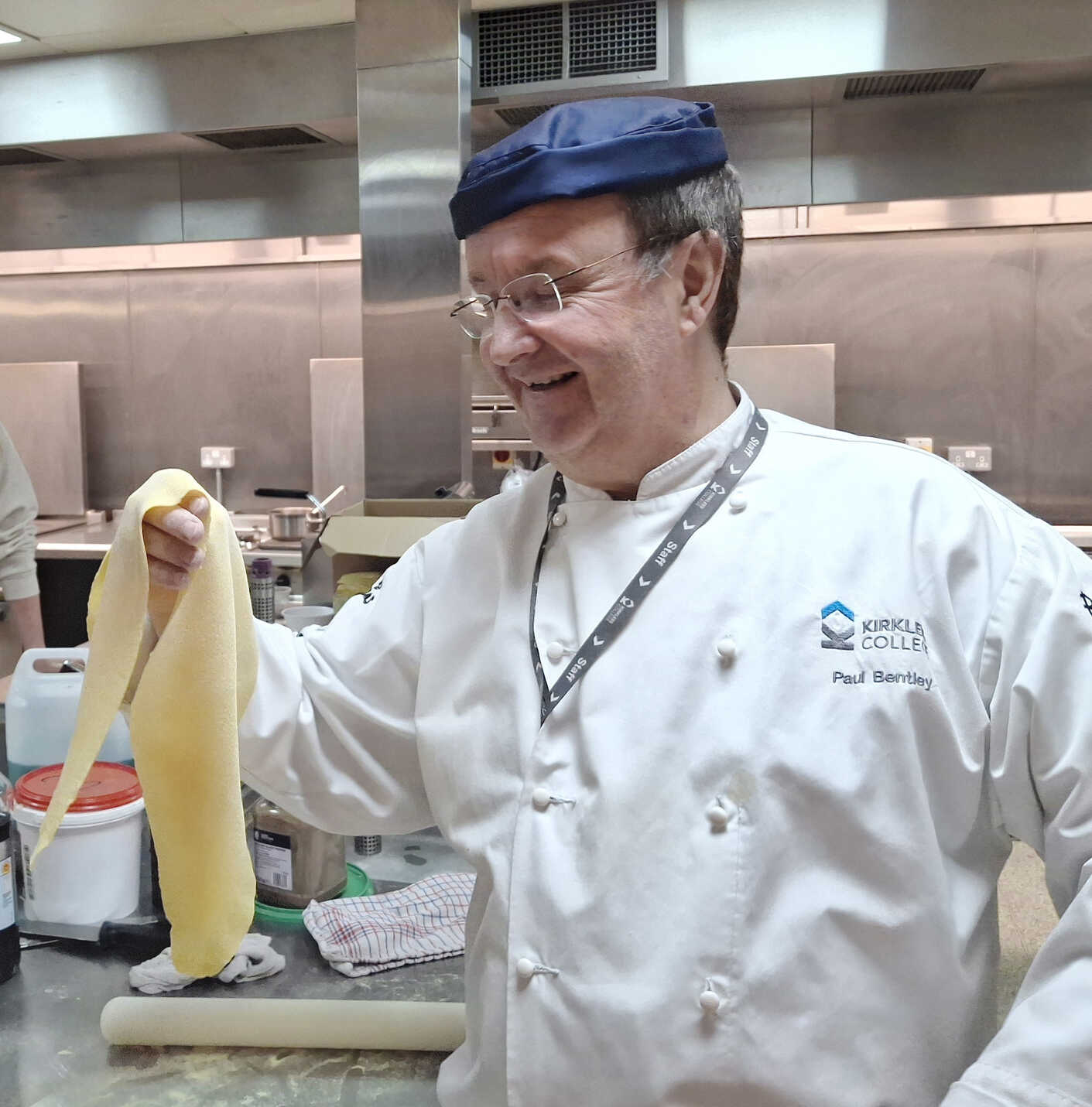
The word rustic was much used during this class.
And it probably applies as much to the tomato sauce as to the pasta.
There seems to be some not insignificant cleavage between Italian-American tomato pasta sauces, and the kinds originally made in Italy.
Salsa is the Italian word for any kind of sauce, including a dip, whereas sugo is the Italian word generally used for cooked tomato sauce, as might be served over pasta.
Sugo al pomodoro (Tomato Sauce) in Italy is almost always a fairly quickly-cooked sauce made with fresh tomatoes. Usually garlic and optionally a vegetable soffritto is fried, then chopped fresh tomatoes are added and reduced to a purée over 30 minutes to one hour. Herbs being added at the end.
The only concession to preserved tomatoes made in Elizabeth David's iconic cookbook Italian Food is the addition of tomato concentrate to the end-of-season tomatoes in her Salsa di Pomidoro (3).
There are no tinned tomatoes in sight.
In Naples they make a similar but even quicker tomato sauce called sugo alla marinara, so-called allegedly! because the Neopolitan fish-wives would put the sauce on to cook when they caught sight of their husband's fishing boats returning to port, and have dinner on the table 10 minutes later when he stomped through the door with his sack of anchovies.
This name is virtually unheard of outside Naples, except as a pizza topping, but is very common in America.
Then there is ragù, which is a longer-braised stew invariably containing meat. Bologna's ragù being the archetype. Tomato-less ragùs are also a thing.
Tomato sauces in the U.S. in contrast, are more often cooked down for many hours. Indeed the length of time your Nonna's Restaurant cooks her sauce seems to have become a competitive sport amongst Italian migrants. This may be due to the fact that these are rarely made from fresh tomatoes, but almost always tinned varieties. Probably because access to fat, ripe, glossy tomatoes was extremely limited for a family of Sicilians newly arrived in East Harlem's Little Italy.
Despite the irony of tomatoes being originally imported into Italy from the Americas.
Most Italians will press their cooked tomato and vegetable sauce through a passatutto (food mill) but since we didn't have access to those in class we just used a hand-blender and a coarse chinois (conical sieve). The result is probably an inferior passata (the product, unsurprisingly, of the passatuto) which doesn't contain the crushed seeds, stalks and foamy air introduced by blending.
But hey - we work with what we have.
Teacher Paul's approach to making his tomato sauce is something of an Italian / American hybrid. We used fresh tomatoes, but cooked them for a lengthy 2 hours. Or would have, if we had the time. Teacher Paul recommends cooking without the surface even moving - he describes it as warming rather than cooking. Or sitting them for a few hours in the bottom of a very low oven.
Once you have your basic sugo al pomodoro you can expand it in various directions:
Throw in olives, capers and anchovies and you'll have puttanesca.
If you add chilli you get an angry sugo all'arrabiata. If you continue with guanciale, pancetta or (spit!) bacon you can make bucatini all'Amatriciana, and if you also throw in some eggs and Italian sausagemeat you can end up in a filthy mess with pasta alla zozzona.
The world of tomato-based pasta sauces is now your oyster. (But not your clam - linguine allla vongole would not usually involve tomatoes.)
And so... on to the rustic pasta.
One of the important lessons Teacher Paul transmitted is the value of using a coarse semolina when working the prepared pasta dough.
Generously scatter semolina over the pasta and work surface when you roll it, fold it, and cut it which will help prevent the dough from sticking whilst simultaneously keeping it dry and avoiding it becoming over-floured.
When it comes to turning your thin translucent sheet of rolled dough into flat pasta ribbons for boiling, you have a series of width and thickness options.
Technically neither spaghetti, which is round, nor linguine which has an oval cross-section are available to you. So:
Paul'sRusticPointers™
There seems to be some not insignificant cleavage between Italian-American tomato pasta sauces, and the kinds originally made in Italy.
Salsa is the Italian word for any kind of sauce, including a dip, whereas sugo is the Italian word generally used for cooked tomato sauce, as might be served over pasta.
Sugo al pomodoro (Tomato Sauce) in Italy is almost always a fairly quickly-cooked sauce made with fresh tomatoes. Usually garlic and optionally a vegetable soffritto is fried, then chopped fresh tomatoes are added and reduced to a purée over 30 minutes to one hour. Herbs being added at the end.
The only concession to preserved tomatoes made in Elizabeth David's iconic cookbook Italian Food is the addition of tomato concentrate to the end-of-season tomatoes in her Salsa di Pomidoro (3).
There are no tinned tomatoes in sight.
In Naples they make a similar but even quicker tomato sauce called sugo alla marinara, so-called allegedly! because the Neopolitan fish-wives would put the sauce on to cook when they caught sight of their husband's fishing boats returning to port, and have dinner on the table 10 minutes later when he stomped through the door with his sack of anchovies.
This name is virtually unheard of outside Naples, except as a pizza topping, but is very common in America.
Then there is ragù, which is a longer-braised stew invariably containing meat. Bologna's ragù being the archetype. Tomato-less ragùs are also a thing.
Tomato sauces in the U.S. in contrast, are more often cooked down for many hours. Indeed the length of time your Nonna's Restaurant cooks her sauce seems to have become a competitive sport amongst Italian migrants. This may be due to the fact that these are rarely made from fresh tomatoes, but almost always tinned varieties. Probably because access to fat, ripe, glossy tomatoes was extremely limited for a family of Sicilians newly arrived in East Harlem's Little Italy.
Despite the irony of tomatoes being originally imported into Italy from the Americas.
Most Italians will press their cooked tomato and vegetable sauce through a passatutto (food mill) but since we didn't have access to those in class we just used a hand-blender and a coarse chinois (conical sieve). The result is probably an inferior passata (the product, unsurprisingly, of the passatuto) which doesn't contain the crushed seeds, stalks and foamy air introduced by blending.
But hey - we work with what we have.
Teacher Paul's approach to making his tomato sauce is something of an Italian / American hybrid. We used fresh tomatoes, but cooked them for a lengthy 2 hours. Or would have, if we had the time. Teacher Paul recommends cooking without the surface even moving - he describes it as warming rather than cooking. Or sitting them for a few hours in the bottom of a very low oven.
Once you have your basic sugo al pomodoro you can expand it in various directions:
Throw in olives, capers and anchovies and you'll have puttanesca.
If you add chilli you get an angry sugo all'arrabiata. If you continue with guanciale, pancetta or (spit!) bacon you can make bucatini all'Amatriciana, and if you also throw in some eggs and Italian sausagemeat you can end up in a filthy mess with pasta alla zozzona.
The world of tomato-based pasta sauces is now your oyster. (But not your clam - linguine allla vongole would not usually involve tomatoes.)
And so... on to the rustic pasta.
One of the important lessons Teacher Paul transmitted is the value of using a coarse semolina when working the prepared pasta dough.
Generously scatter semolina over the pasta and work surface when you roll it, fold it, and cut it which will help prevent the dough from sticking whilst simultaneously keeping it dry and avoiding it becoming over-floured.
When it comes to turning your thin translucent sheet of rolled dough into flat pasta ribbons for boiling, you have a series of width and thickness options.
Technically neither spaghetti, which is round, nor linguine which has an oval cross-section are available to you. So:
- tagliolini or tagliarini also known as tajarin in the local dialect is a very narrow (2-3mm - half the width of linguine) ribbon from the Piedmont area in the North West of Italy, capital Turin. Best served with light delicate sauces.
- fettucine (5-7mm) is a wider and thicker ribbon from the Lazio area around Rome. Typified by fettucine alfredo
- tagliatelle (6-8mm) is usually slightly wider and thinner than fettucine and hails from the North-Eastern Emilia-Romagna region, especially Bologna with whose rich meat sauce
ragù alla Bolognese it is famously associated. Not spaghetti - despite what you might have heard in Britain.
Apocryphally it was styled after Lucretia Borgia's hair. Who must have looked like a badly animated cartoon character if so. - pappardelle is the widest of the ribbon pastas at up to 1" (2-3cm). It comes from the central Tuscany region, is sometimes given scalloped or fluted edges in modern formulations, and is frequently paired with mushrooms or robust game stews.
Paul'sRusticPointers™
- Fresh pasta freezes well - just sprinkle with flour or semolina, roll up into nests, partially freeze until stiff on a tray, then seal into freezer bags and freeze completely.
To cook - drop directly into boiling water without thawing. - Semolina is very effective at protecting dough or pastry - if you sprinkle it over the inside of a pastry-lined pie dish before adding the filling it will shield it and help to keep the crust crisp when it bakes.
- You can freeze tomatoes whole, like snooker balls, for adding to sauces or stews if tomato plants have completely taken over your garden.
- Teacher Paul's tomatoes grow better in his garden than in his greenhouse. I'm not sure how this is relevant.
- Fresh pasta will keep in the fridge for a couple of days, though it may discolour. Be sure to sprinkle generously with flour or semolina and roll up into nests so it doesn't stick together in a messy clump.
- Teacher Paul recommends freezing the tomato sauce in ice cube trays so you can just pop them out to use individually when making sauces. Though I personally would need to eat about 20 of them at a time, so maybe larger containers?
- Pasta is best made with a strong gluten, high protein content flour like that made from the durum wheat variety.
menu
Pasta Like-a Paul-a Used to Make-a
Rustic Pasta
Rustic Pasta
Rustic. Ribbons of it.
Tomato Sauce
With vaguely puttanescan overtones.
Fresh Rustic Pasta
class staple ingredient pasta
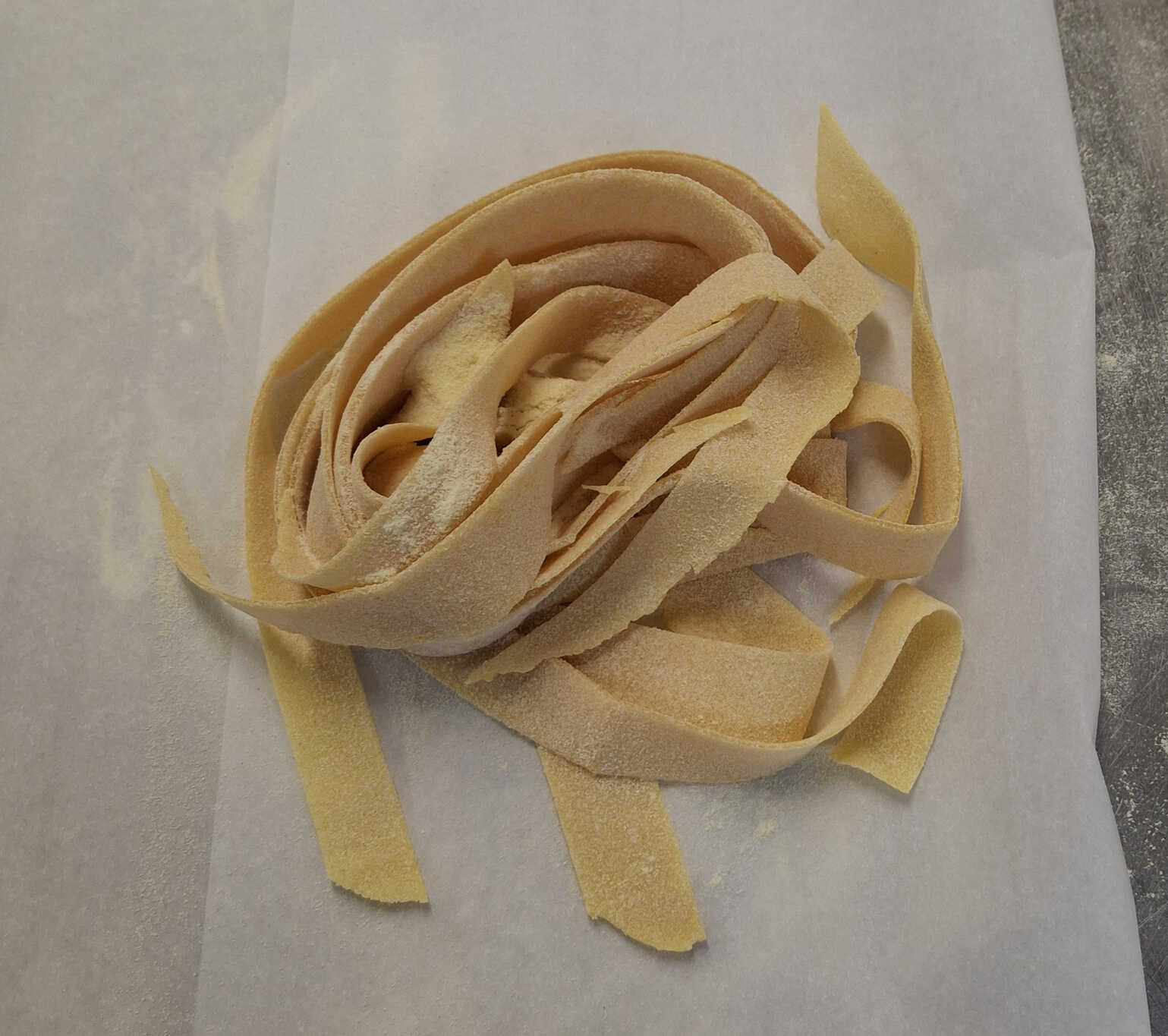
The general rule of thumb for pasta proportions is 100g flour per egg.
If you want a richer, silkier, yellow pasta than use only the egg yolks, and approximately 3 egg yolks per 100g flour.
Serving quantities are reckoned as 1 egg per person plus 1 egg extra. So I don't really think this Class recipe would actually serve 4 people. More like 2.
00 is the Italian grade for super-fine baking flour. It has nothing to do with the protein or gluten content.
So you should use durum wheat 00 flour or semolina for best results.
A fine flour will produce a smoother pasta, and semolina will give pasta more texture and graininess.
You pays your money, you makes your choice.
If you want a richer, silkier, yellow pasta than use only the egg yolks, and approximately 3 egg yolks per 100g flour.
Serving quantities are reckoned as 1 egg per person plus 1 egg extra. So I don't really think this Class recipe would actually serve 4 people. More like 2.
00 is the Italian grade for super-fine baking flour. It has nothing to do with the protein or gluten content.
So you should use durum wheat 00 flour or semolina for best results.
A fine flour will produce a smoother pasta, and semolina will give pasta more texture and graininess.
You pays your money, you makes your choice.
Serves 4. Supposedly.
Ingredients
- 300 g 00 flour (or plain flour)
- 3 large eggs or 6 egg yolks, or a mixture
- 1 tbsp olive oil
- Pinch of salt
- Semolina flour (for dusting & preventing sticking)
Make the Dough:
Create a well: Place flour and salt on the table or in a bowl. Make a deep well in the centre.
Use a fork to gradually pull flour into the eggs until a thick paste forms.
Why? Resting relaxes gluten ⇒ easier rolling and better texture.
Roll the Pasta:
Cut dough into 2-4 pieces. Keep unused pieces wrapped.
Flatten one piece into a thick oval with your hands.
Lightly dust the table with semolina (prevents sticking without making dough heavy).
Roll from the centre outward, turning the dough often.
Tip: If dough springs back, rest it 5 minutes.
Cut the Pasta:
Dust the rolled sheet lightly with semolina.
Fold the sheet loosely into thirds (like a letter).
Use a sharp knife to cut strips:
Why semolina? It stays dry and grainy, keeping strands separate.
Cook the Pasta:
Bring a large pot of generously salted water to a rolling boil.
Add pasta and stir immediately.
Cook 3-4 minutes until tender but slightly firm.
Drain gently.
Sauce the Pasta:
Add drained pasta to the pan of warm tomato sauce.
Toss with a splash of pasta water until glossy and coated.
Garnish & Serve:
Top with grated Parmesan.
Add torn basil leaves.
Optional: drizzle with olive oil for shine.
Serve immediately while hot.
Create a well: Place flour and salt on the table or in a bowl. Make a deep well in the centre.
Since eggs vary in size it is best to begin with less flour than you might need and add extra at the end to reach the desired consistency.
Crack eggs into the well, add olive oil if using.Use a fork to gradually pull flour into the eggs until a thick paste forms.
Just use your hands, you sissy!
Knead (8 minutes): Bring together and knead until smooth, elastic, and slightly firm.
The dough should not be sticky.
Rest (minimum 20 minutes): Wrap in cling film.Why? Resting relaxes gluten ⇒ easier rolling and better texture.
Roll the Pasta:
Cut dough into 2-4 pieces. Keep unused pieces wrapped.
Flatten one piece into a thick oval with your hands.
Lightly dust the table with semolina (prevents sticking without making dough heavy).
Roll from the centre outward, turning the dough often.
Roll into a very elongated oval shape, or ideally a long rectangle.
Aim for 1-2 mm thickness (thin but not transparent).Tip: If dough springs back, rest it 5 minutes.
Cut the Pasta:
Dust the rolled sheet lightly with semolina.
Fold the sheet loosely into thirds (like a letter).
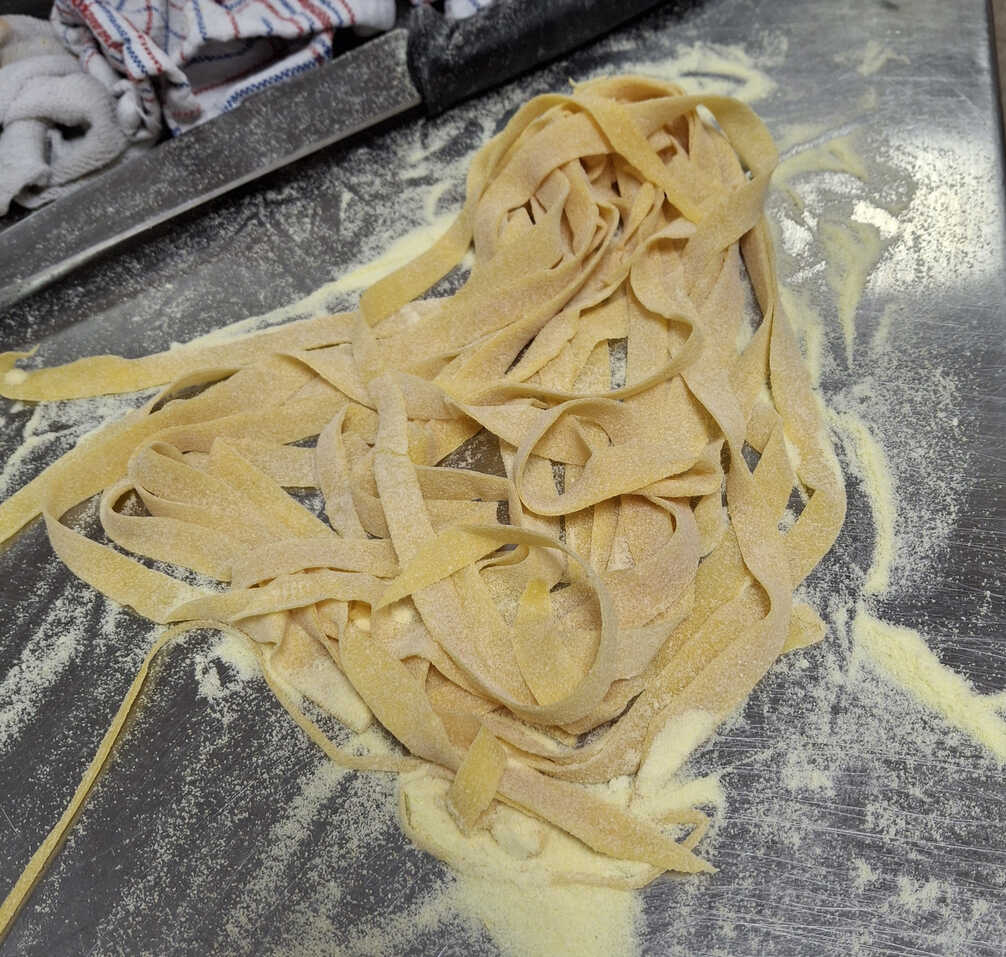
Use a sharp knife to cut strips:
- Tagliatelle: 8-10 mm
- Pappardelle: 15-20 mm
I think that's kind of wide for tagliatelle, and kind of narrow for papparedelle.
Rustic ribbons: uneven widths for a handmade look
This would probably make an Italian cry.
Pasta shapes, widths and thicknesses are carefully chosen and matched to their sauces. They would also take different times to cook to the right level of doneness.
Just choose a width and stick with it!
Unfold strips and toss gently in semolina to stop sticking.Pasta shapes, widths and thicknesses are carefully chosen and matched to their sauces. They would also take different times to cook to the right level of doneness.
Just choose a width and stick with it!
Why semolina? It stays dry and grainy, keeping strands separate.
Cook the Pasta:
Bring a large pot of generously salted water to a rolling boil.
Add pasta and stir immediately.
Cook 3-4 minutes until tender but slightly firm.
Depending on thickness fresh pasta will be ready anything from 30 seconds to 5 minutes, but generally 2-3 minutes.
It's pretty much ready when it floats to the top and starts to swell, but have a taste to make sure it's not still floury or chewy.
Reserve a cup of pasta water (helps sauce cling).It's pretty much ready when it floats to the top and starts to swell, but have a taste to make sure it's not still floury or chewy.
Drain gently.
Sauce the Pasta:
Add drained pasta to the pan of warm tomato sauce.
Toss with a splash of pasta water until glossy and coated.
Ideally the pasta finishes cooking in the sauce.
Adjust seasoning.Garnish & Serve:
Top with grated Parmesan.
Add torn basil leaves.
Optional: drizzle with olive oil for shine.
Serve immediately while hot.
Hmmm. Rustic!
Tomato Sauce
class pasta sauce
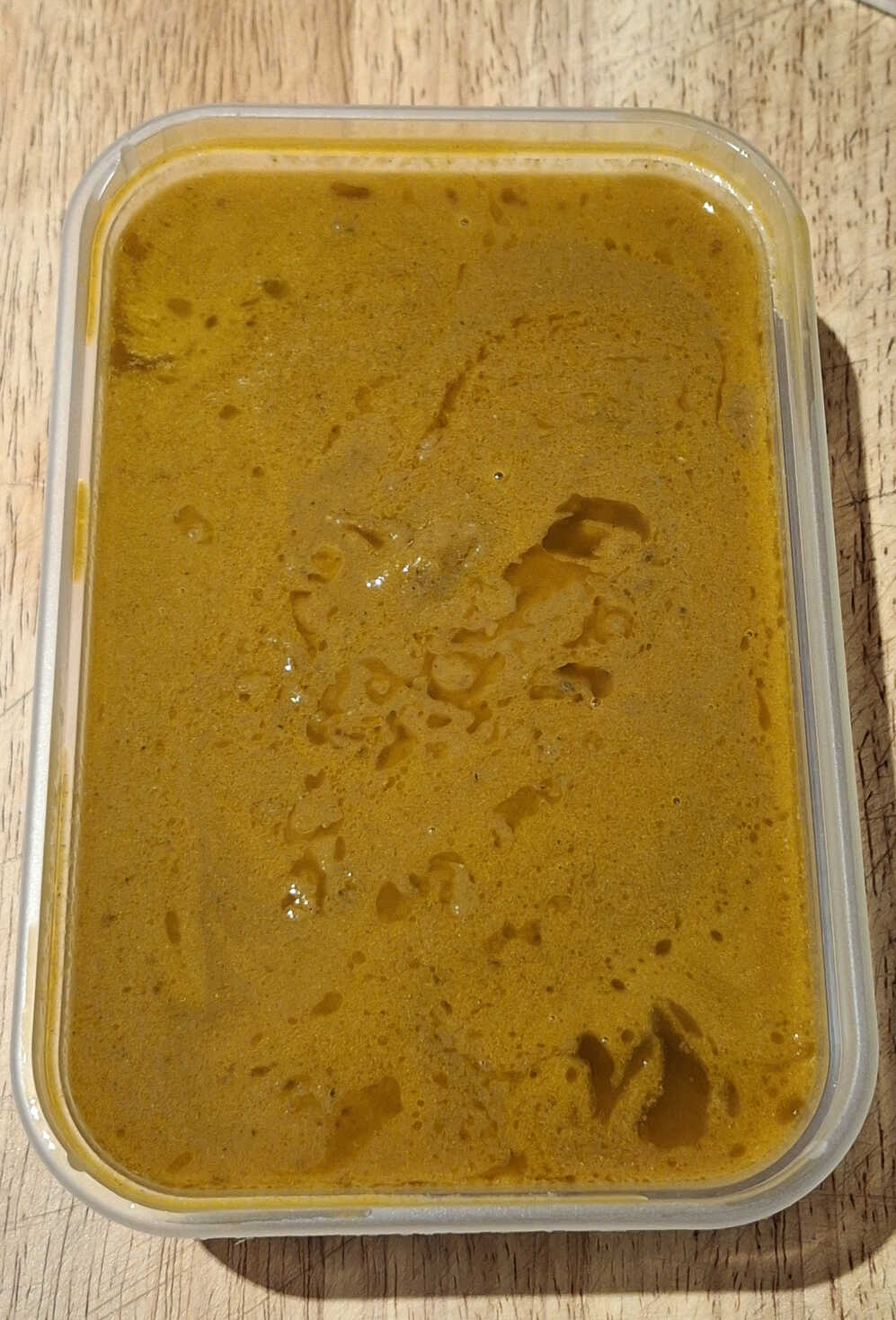
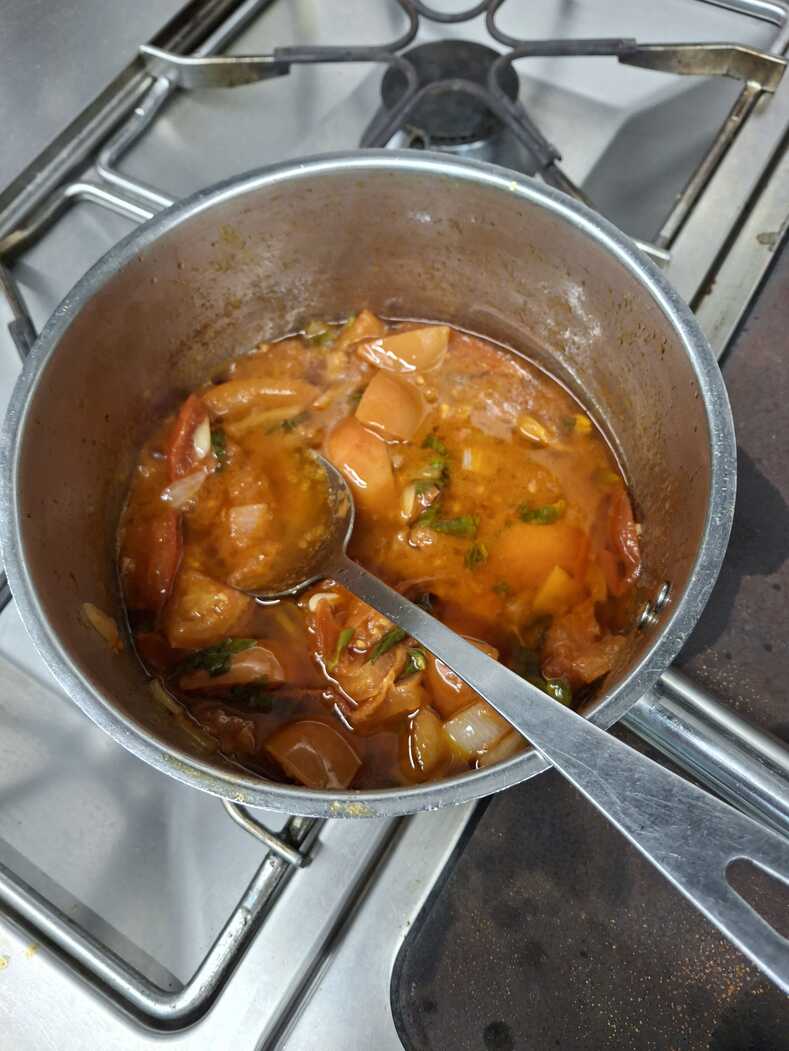
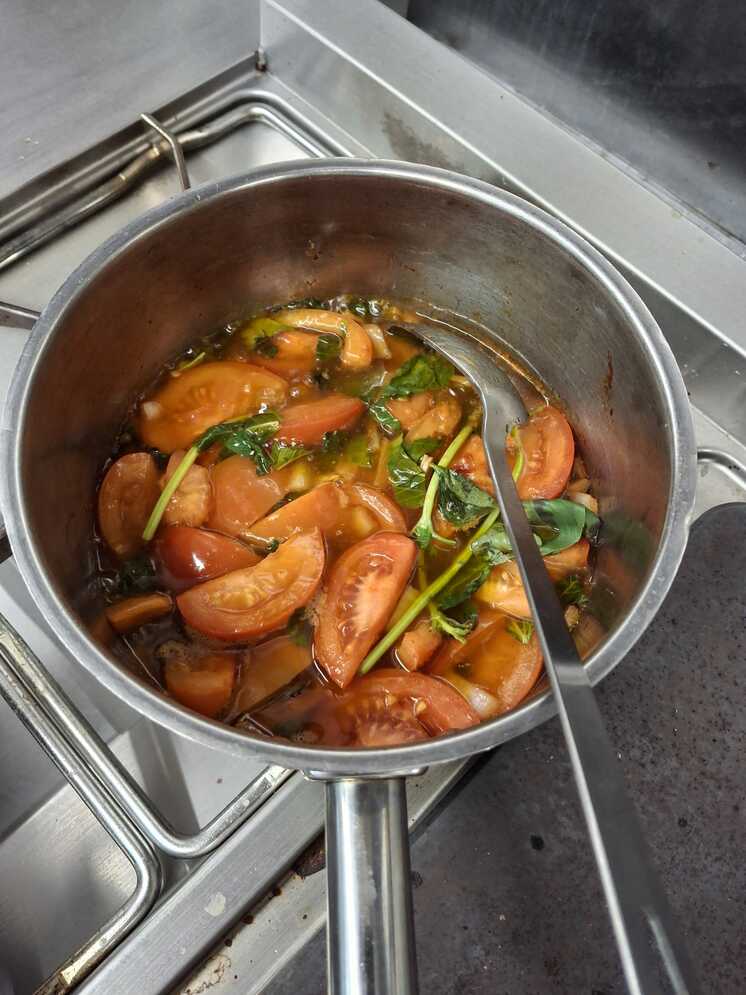
Somewhere between a basic Italian and American tomato sauce.
Serves 4
Ingredients
- 800g / 6 large ripe tomatoes, roughly chopped (or 2 x 400 g tins chopped tomatoes)
- 1 small onion, roughly chopped
- 2 garlic cloves, sliced
- 1 tblsp tomato purée
- 1-2 tblsps vinegar red wine, sherry or balsamic
- ½ tsp sugar (optional, balances acidity)
- salt & pepper
- handful fresh basil
- up to 200ml olive oil
Serving Options:- mozzarella, torn
- olives, slightly broken up
- capers
- sun-dried tomatoes, chopped
- grated parmesan or pecorino cheese
- small or torn basil leaves
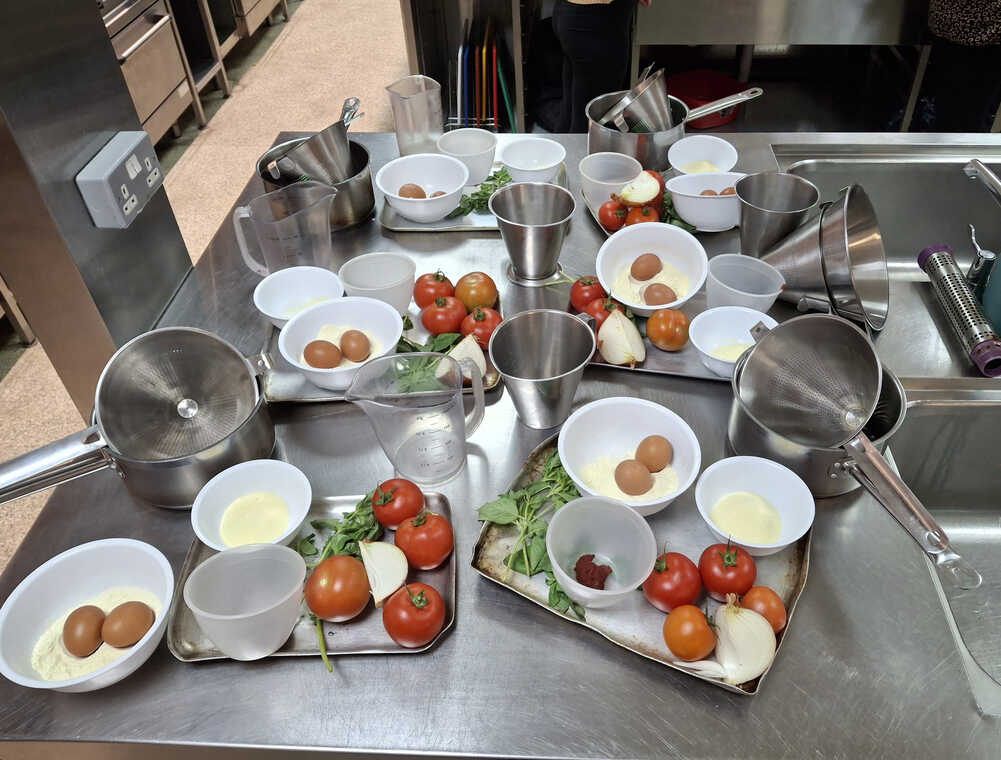
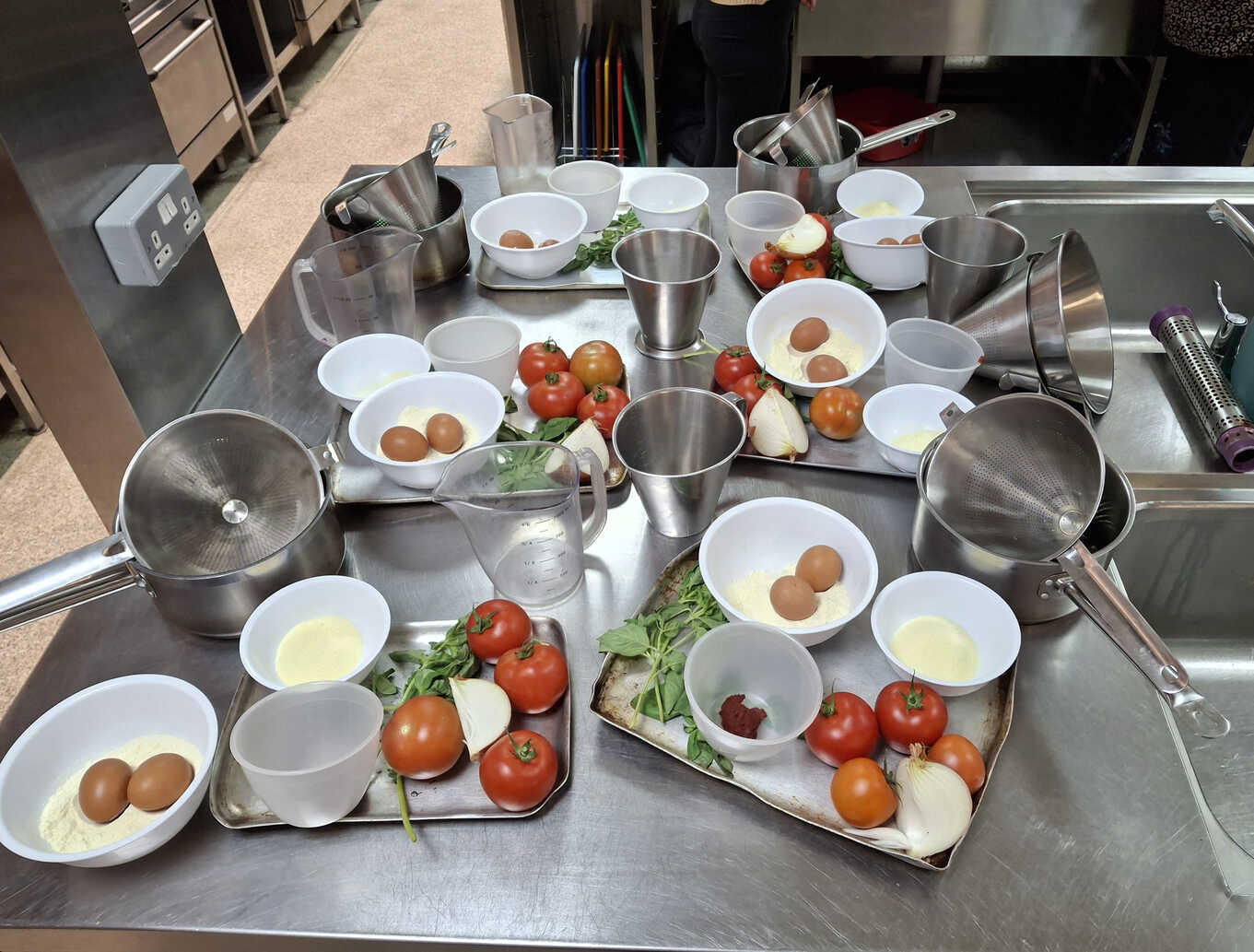
Roughly chop the tomatoes, onion, garlic into a pot. Tear the basil leaves and add the stalks. Add the purée.
Either pass through a food mill, or whizz up until smooth with a hand blender and pass through a chinois or sieve. The sauce should be velvety and coat the back of a spoon.
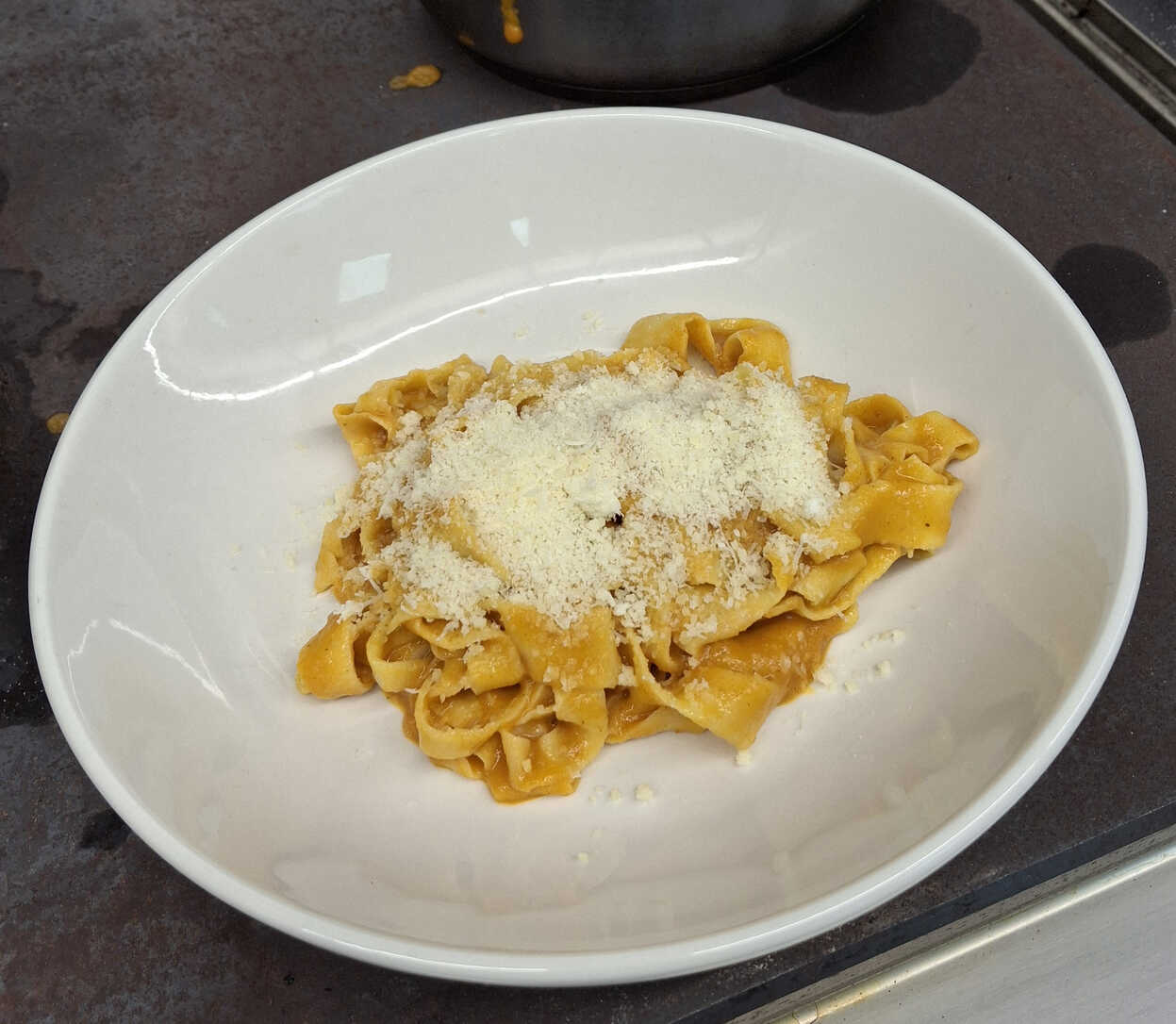
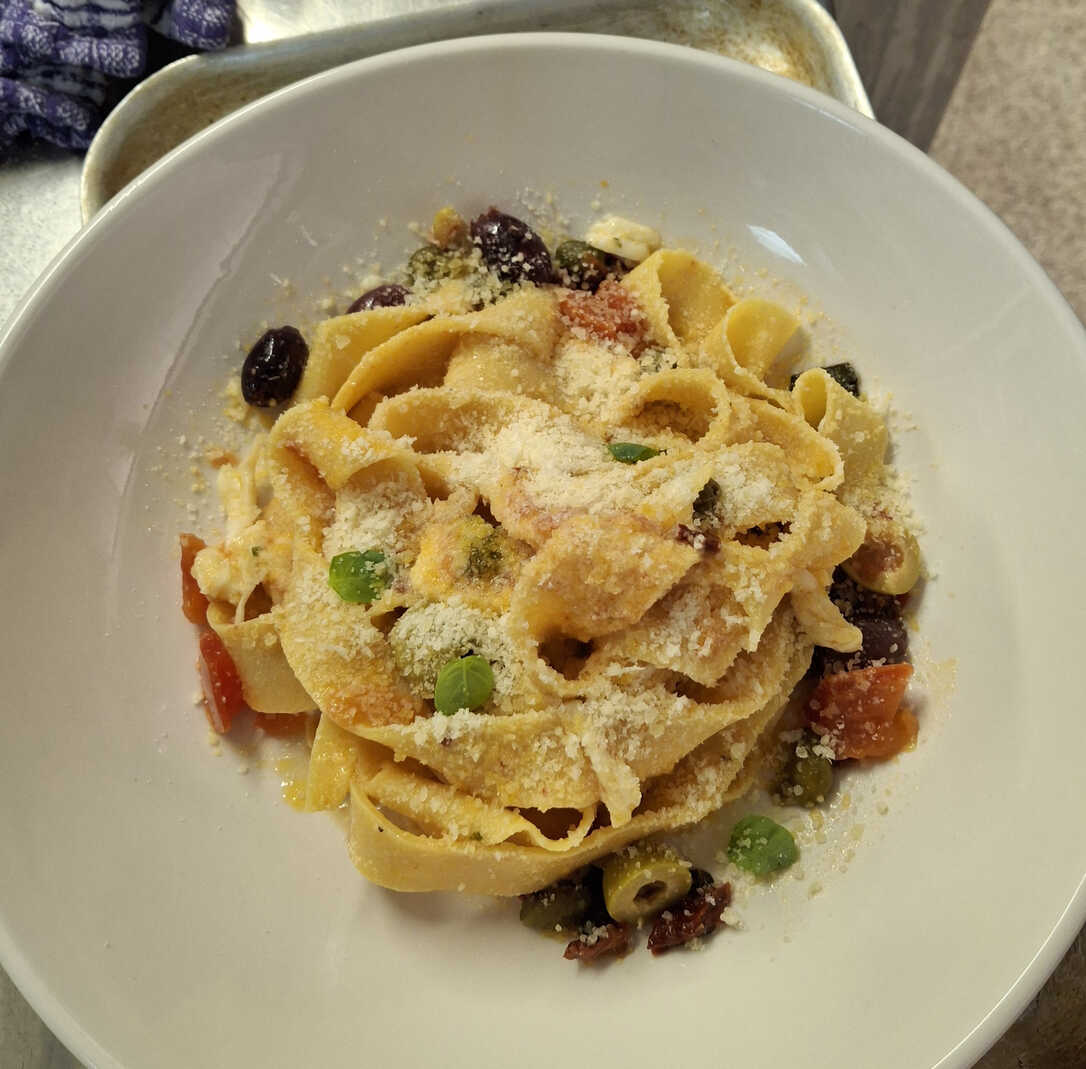
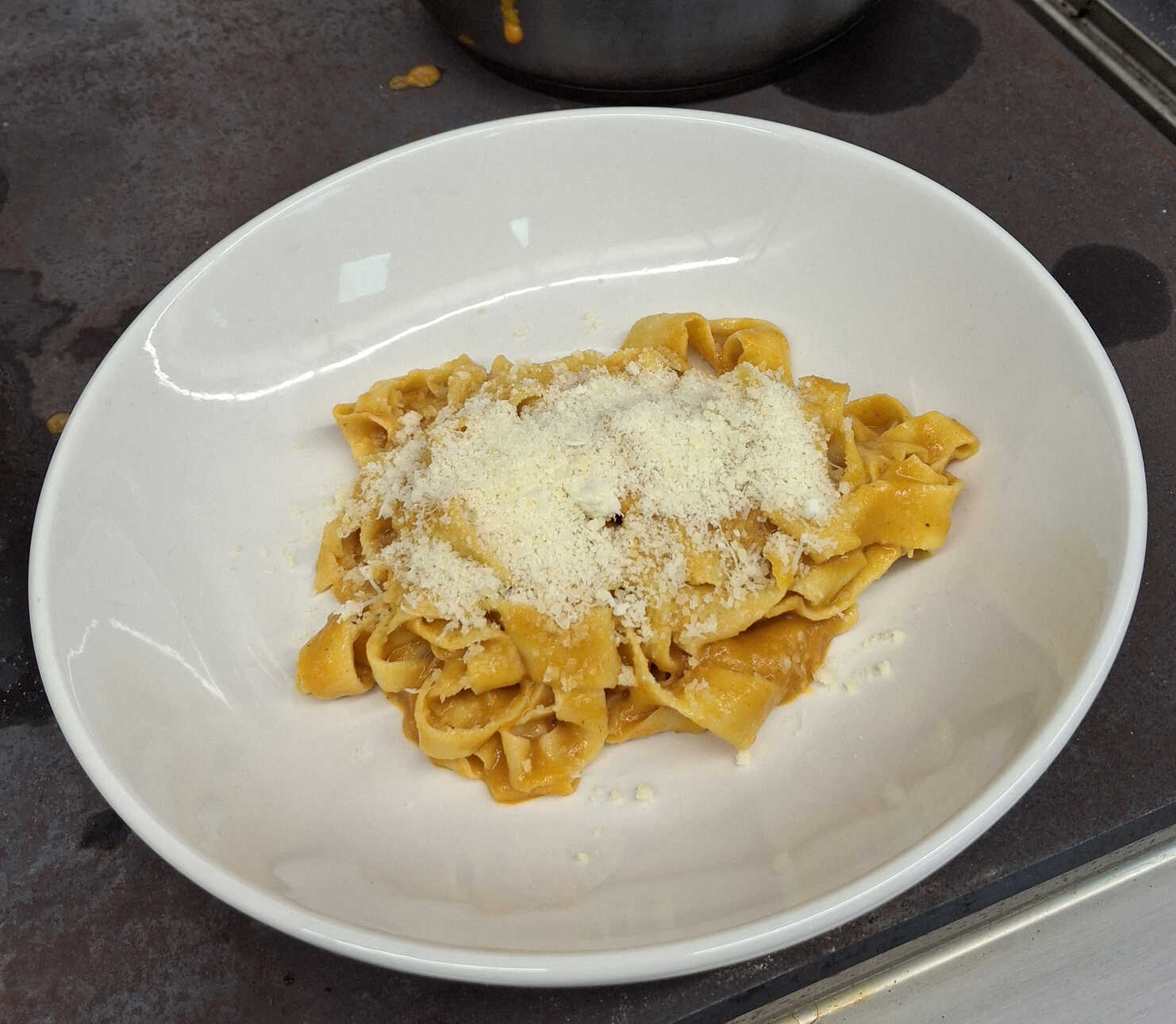
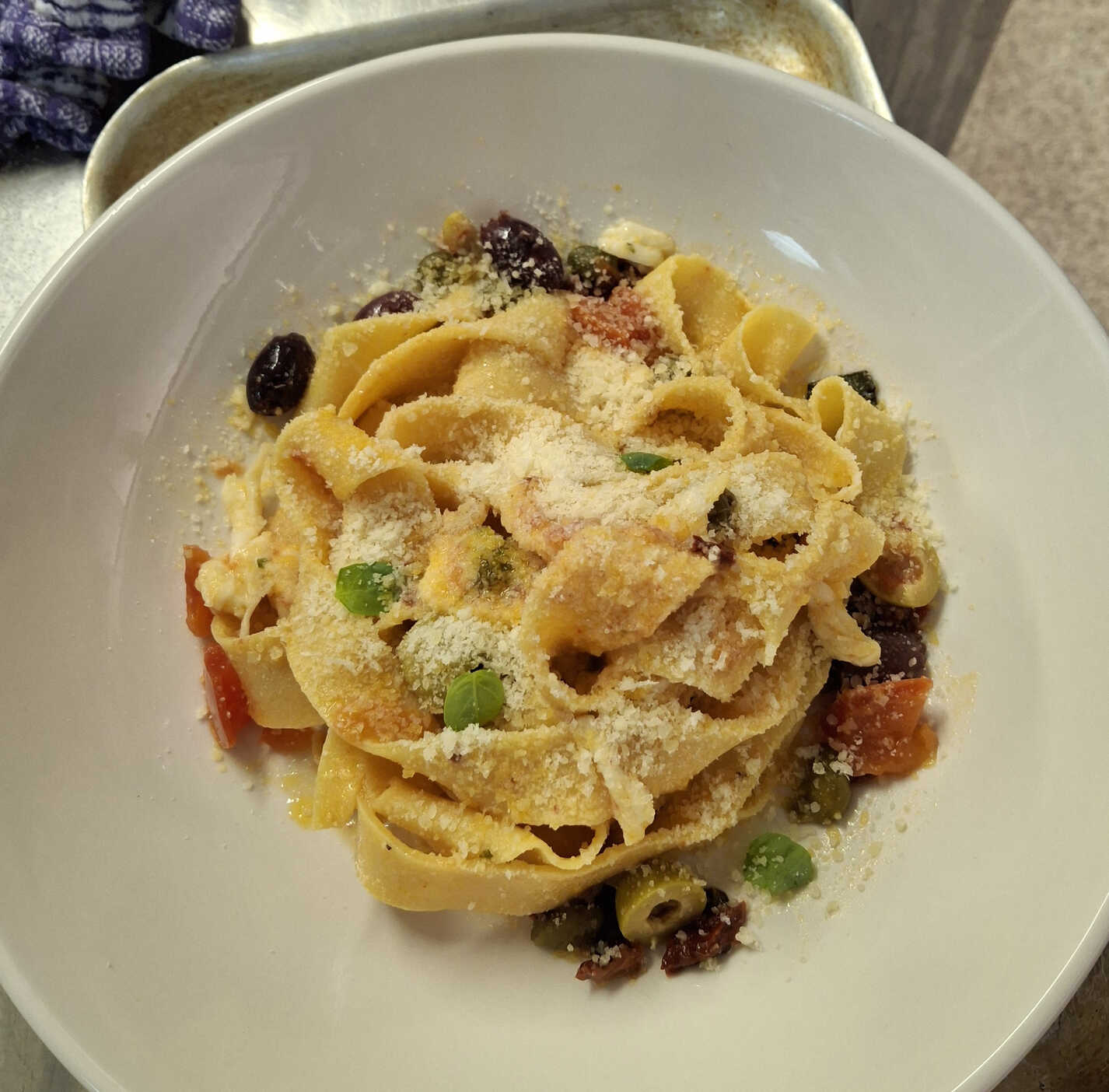
To serve, toss al dente pasta in your warm pasta sauce with a splash of pasta water and any of the extra ingredients you fancy, twirl onto plates and scatter with grated cheese.
Add a few small basil leaves for style points.
I've seen it recommended to include any tomato leaves too!
Season generously with salt and pepper, sweeten with sugar, honey or fruit jelly if required
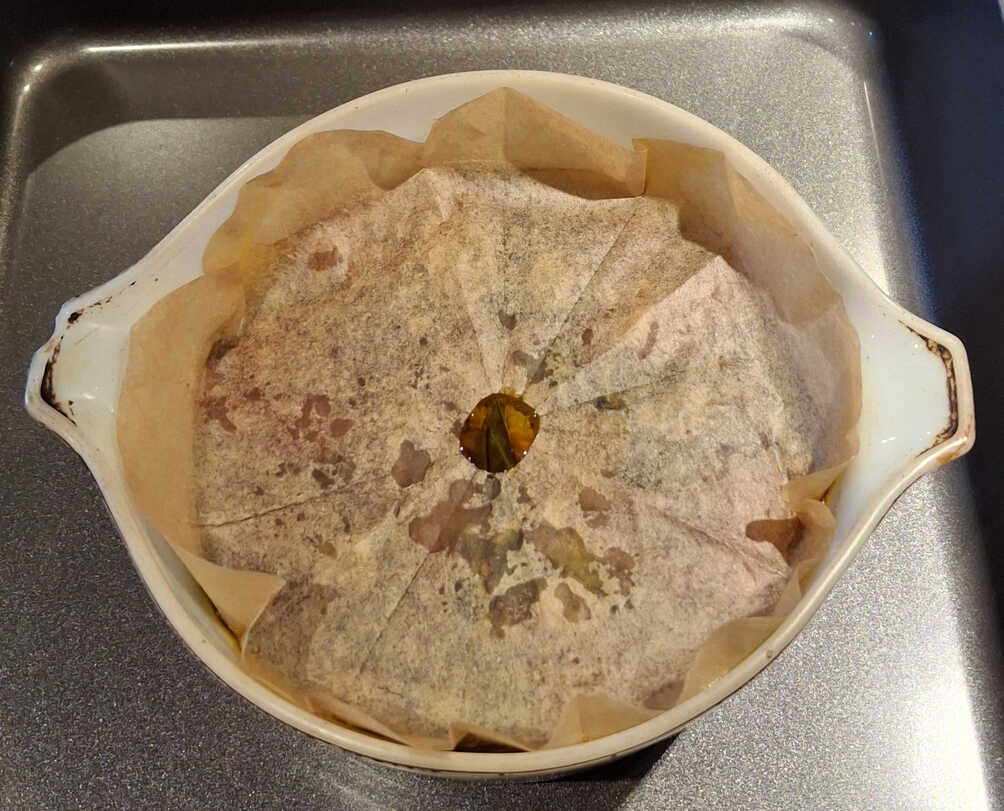
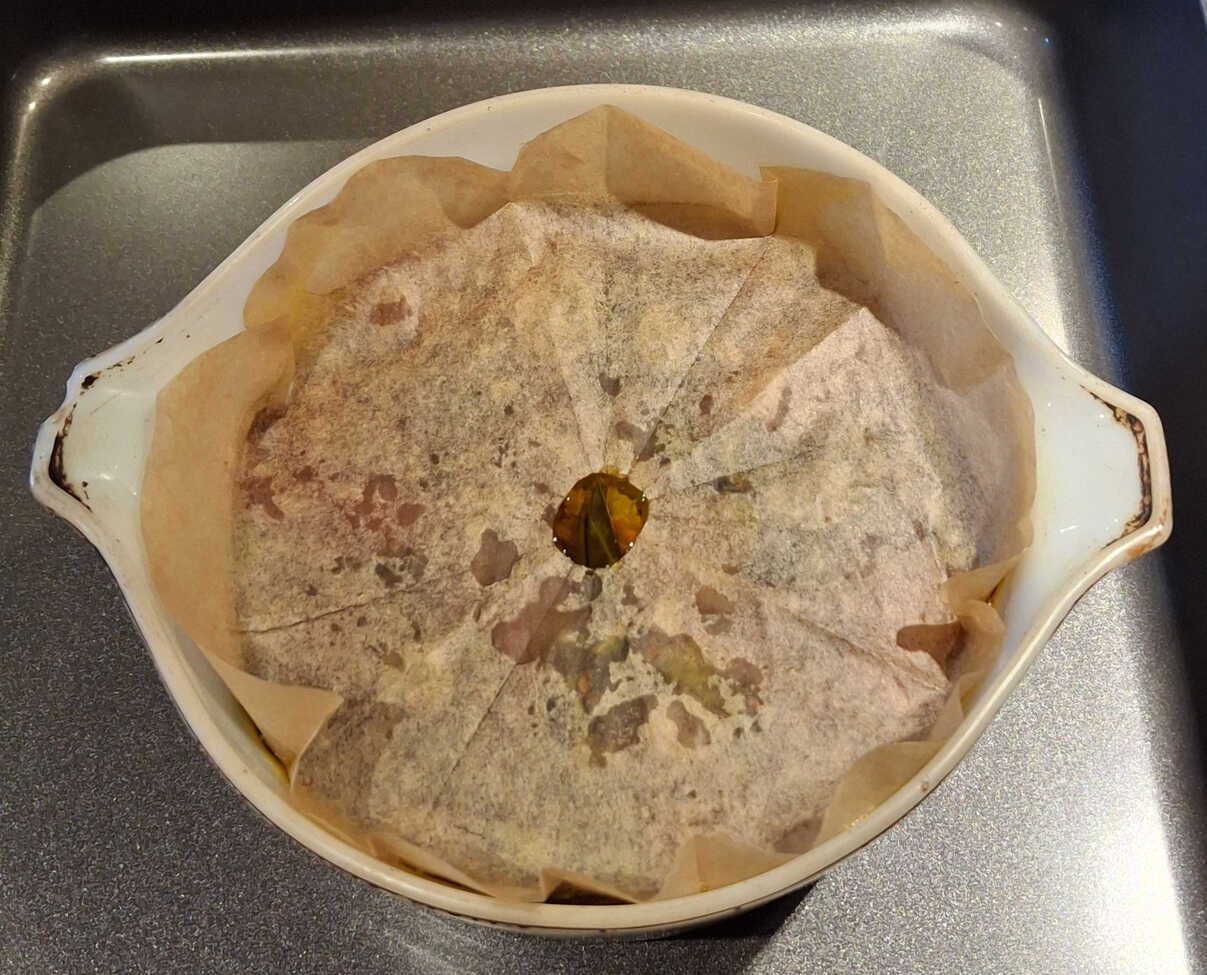
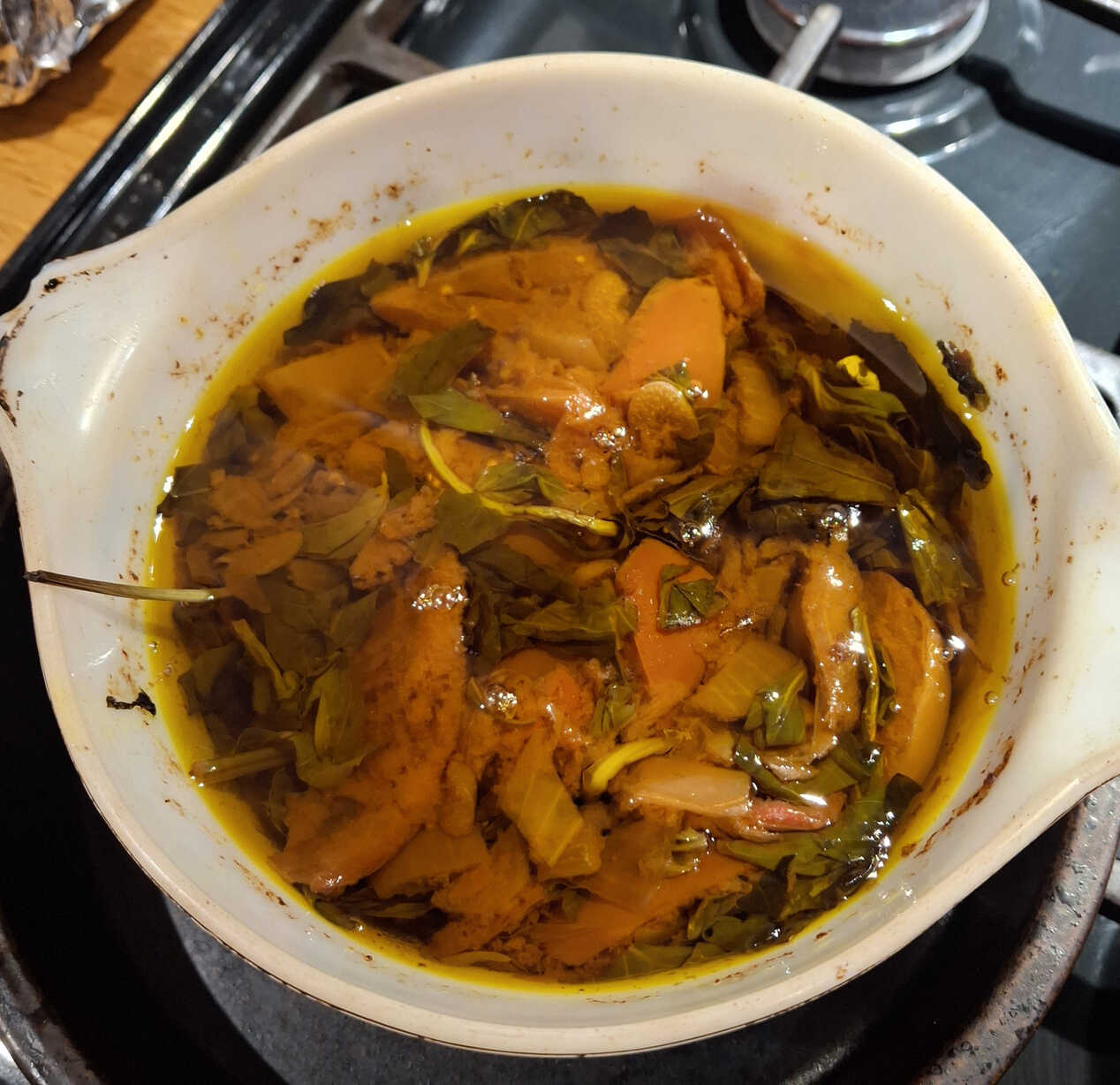
add a dash of fine vinegar we had sherry! and add a surprisingly large volume of decent olive oil to come two-thirds of the way up the vegetables.
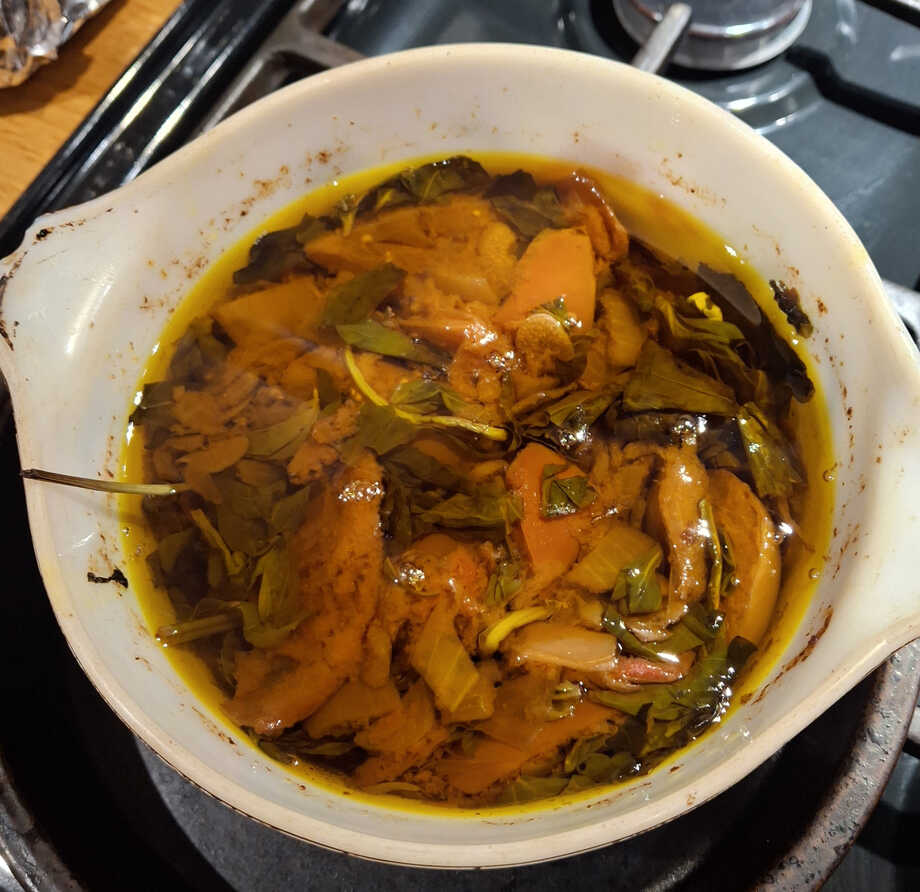
Warm up the pot on the stove over a very low flame without boiling - the surface should not move, and allow the vegetables to slowly soften and break down for a couple of hours.
At the end they should have submerged into the oil.
Alternatively you can do this in a very low oven.
Either pass through a food mill, or whizz up until smooth with a hand blender and pass through a chinois or sieve. The sauce should be velvety and coat the back of a spoon.
To serve, toss al dente pasta in your warm pasta sauce with a splash of pasta water and any of the extra ingredients you fancy, twirl onto plates and scatter with grated cheese.
Add a few small basil leaves for style points.
Delicious!