Introduction to Bistro Cookery - Scamper to the Seaside

Scampi is the Italian word for Langoustines, a variety of small lobster [Nephrops Norvegicus] - also known as Norwegian Lobsters or Dublin Bay Prawns.
One of the typical ways in which scampi are prepared in Italy is to cook them in olive oil, garlic and white wine finished with a squeeze of lemon. And this style of cooking has become what scampi refers to in America - meaning that there you can order chicken scampi or, absurdly, shrimp scampi.
There is a long history of this kind of crustaceous preparation in British food.
Back in 1747, for instance, on page 148 of Hannah Glasse's cookbook The Art of Cookery Made Plain and Easy, which far exceeds Any Thing of the Kind yet publifhed there is a recipe called To grill Shrimps which describes the cooking and browning of scallop shells filled with shrimp and buttered breadcrumbs.
But wholesale crustacean delivery company Young's Seafood claim to be responsible for a more recent explosion in scampi-scoffing:
They peddle the story claim that as the lobster-supplier to the Ritz Hotel of London during a post-war shortage in 1946 they instead substituted langoustines. The beleaguered hotel chef decided to try breading and deep-frying these, and thus was scampi (re-)born.
Sounds more like the anonymous chef in this story invented them, not Young's, but that's their story and their sticking to it.
Either way scampi and chips quickly became a popular, and profitable, staple of seaside resorts in the 50s, so much so that scampi also became notorious for being adulterated with other, lesser, fish. Particularly monkfish which was cheap and unpopular at the time - imagine that!
Consequently our government has since regulated the meaning of scampi to reduce fraud. The The Fish Labelling (England) Regulations Statutory Instrument 2010 (Page 27) officially designates Scampi as meaning Nephrops norvegicus, but otherwise seems somewhat ambiguous as to how much scampi is required in scampi.
The Fishy Society asserts that there is a semi-legal requirement that scampi contains at least 33% scampi. Whatever that means!
So personally I would steer clear of anything labelling itself as scampi without being explicit about precisely how much langoustine it actually contains.
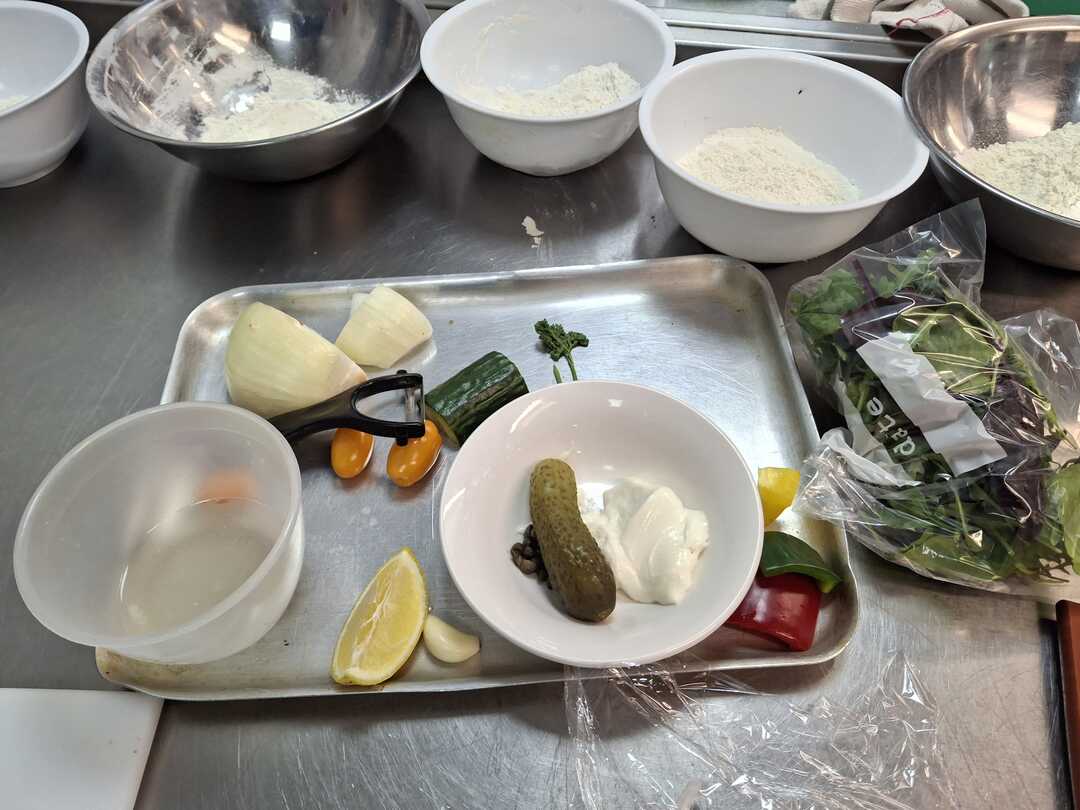
Best to batter your own, as Teacher Paul will today demonstrate...
Some fishy PaulPointers™:
One of the typical ways in which scampi are prepared in Italy is to cook them in olive oil, garlic and white wine finished with a squeeze of lemon. And this style of cooking has become what scampi refers to in America - meaning that there you can order chicken scampi or, absurdly, shrimp scampi.
You won't believe what I made with MY leftover langoustines!
Here in the UK the term has come to mean just the langoustine's tail meat, breaded or battered, and fried.There is a long history of this kind of crustaceous preparation in British food.
Back in 1747, for instance, on page 148 of Hannah Glasse's cookbook The Art of Cookery Made Plain and Easy, which far exceeds Any Thing of the Kind yet publifhed there is a recipe called To grill Shrimps which describes the cooking and browning of scallop shells filled with shrimp and buttered breadcrumbs.
But wholesale crustacean delivery company Young's Seafood claim to be responsible for a more recent explosion in scampi-scoffing:
They peddle the story claim that as the lobster-supplier to the Ritz Hotel of London during a post-war shortage in 1946 they instead substituted langoustines. The beleaguered hotel chef decided to try breading and deep-frying these, and thus was scampi (re-)born.
Sounds more like the anonymous chef in this story invented them, not Young's, but that's their story and their sticking to it.
Either way scampi and chips quickly became a popular, and profitable, staple of seaside resorts in the 50s, so much so that scampi also became notorious for being adulterated with other, lesser, fish. Particularly monkfish which was cheap and unpopular at the time - imagine that!
Consequently our government has since regulated the meaning of scampi to reduce fraud. The The Fish Labelling (England) Regulations Statutory Instrument 2010 (Page 27) officially designates Scampi as meaning Nephrops norvegicus, but otherwise seems somewhat ambiguous as to how much scampi is required in scampi.
The Fishy Society asserts that there is a semi-legal requirement that scampi contains at least 33% scampi. Whatever that means!
So personally I would steer clear of anything labelling itself as scampi without being explicit about precisely how much langoustine it actually contains.
Best to batter your own, as Teacher Paul will today demonstrate...
Some fishy PaulPointers™:
- Teacher Paul observes that when using carbonated liquid, beer, or bicarbonate of soda with an acid (like vinegar) to aerate a fish batter, you should not leave it too long before using it. Or all the bubbles will be gone.
- Teacher Paul randomly asserts the best way to win a Yorkshire Pudding Competition is to cover your puddings in a really delicious gravy. This will completely fool the judges.
- Teacher Paul opines that, as for a batter recipe, a Yorkshire Pudding mixture should not be left to stand for very long. Experts disagree.
- Teacher Paul mentions that if you blend your vinaigrette (fortified with a little mustard) like a maniac, it may remain emulsified for days.
- Teacher Paul reassures us that sometimes, no matter what you do, frozen langoustines will turn your batter soggy. Although in my case I suspect user error.
- Teacher Paul recommends Maris Piper potatoes for chips, and King Edwards for mash.
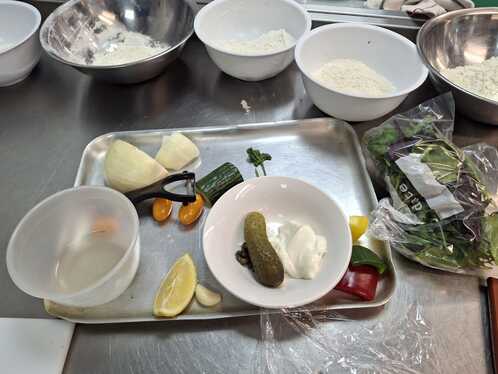
- Teacher Paul suggests wrapping your spoons in cling film to better produce smooth quenelles for serving a tartar sauce, say.
menu
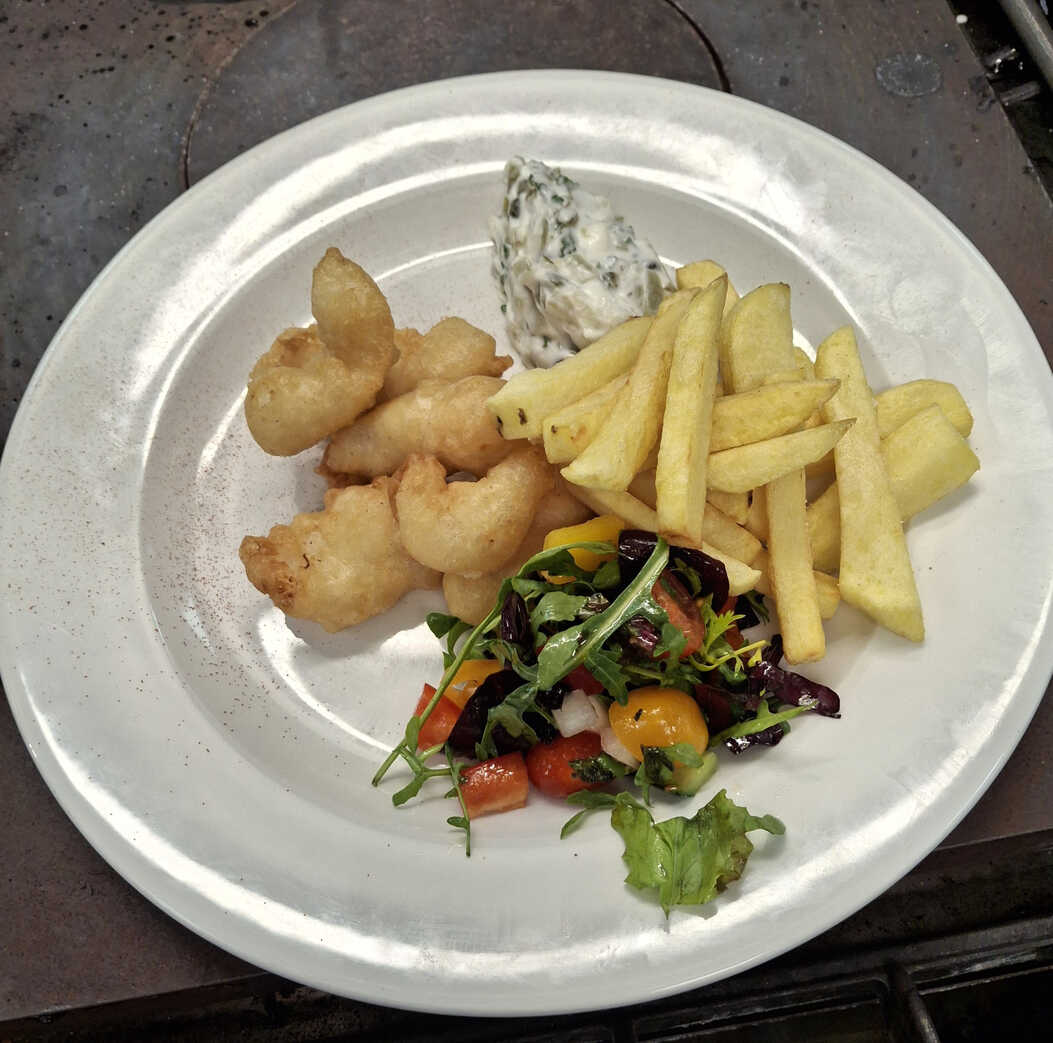
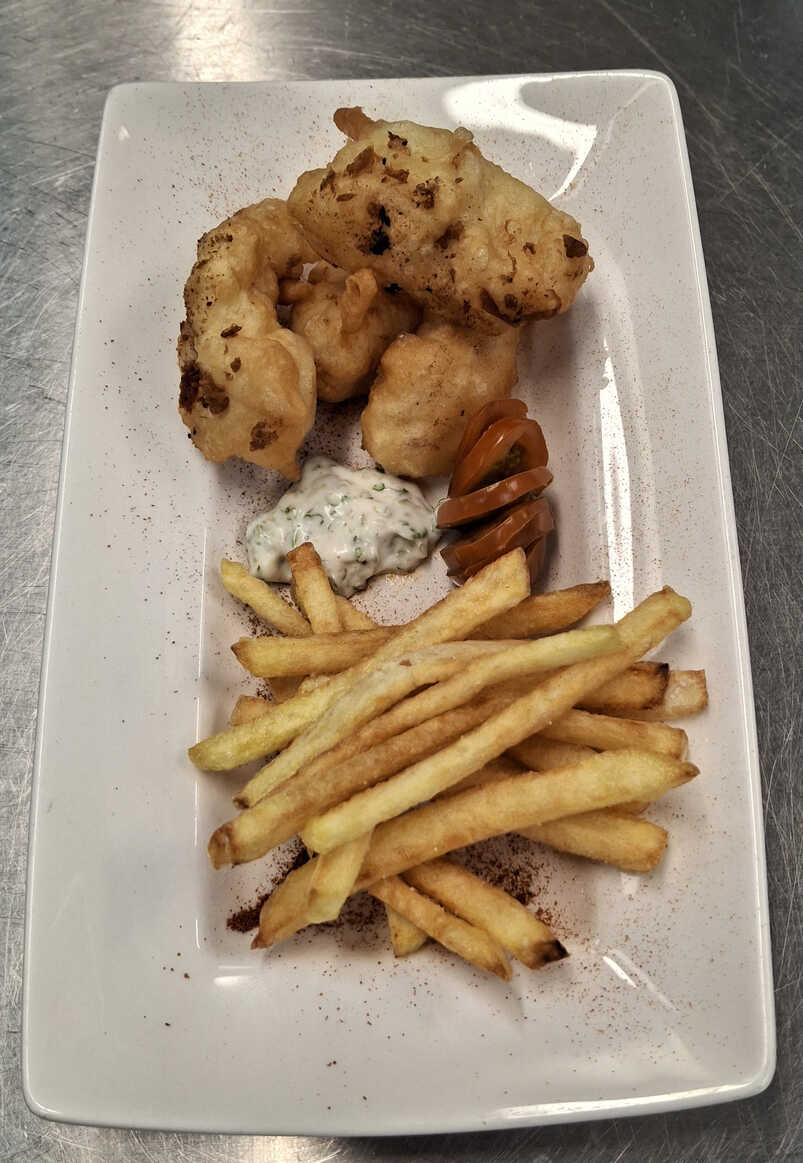
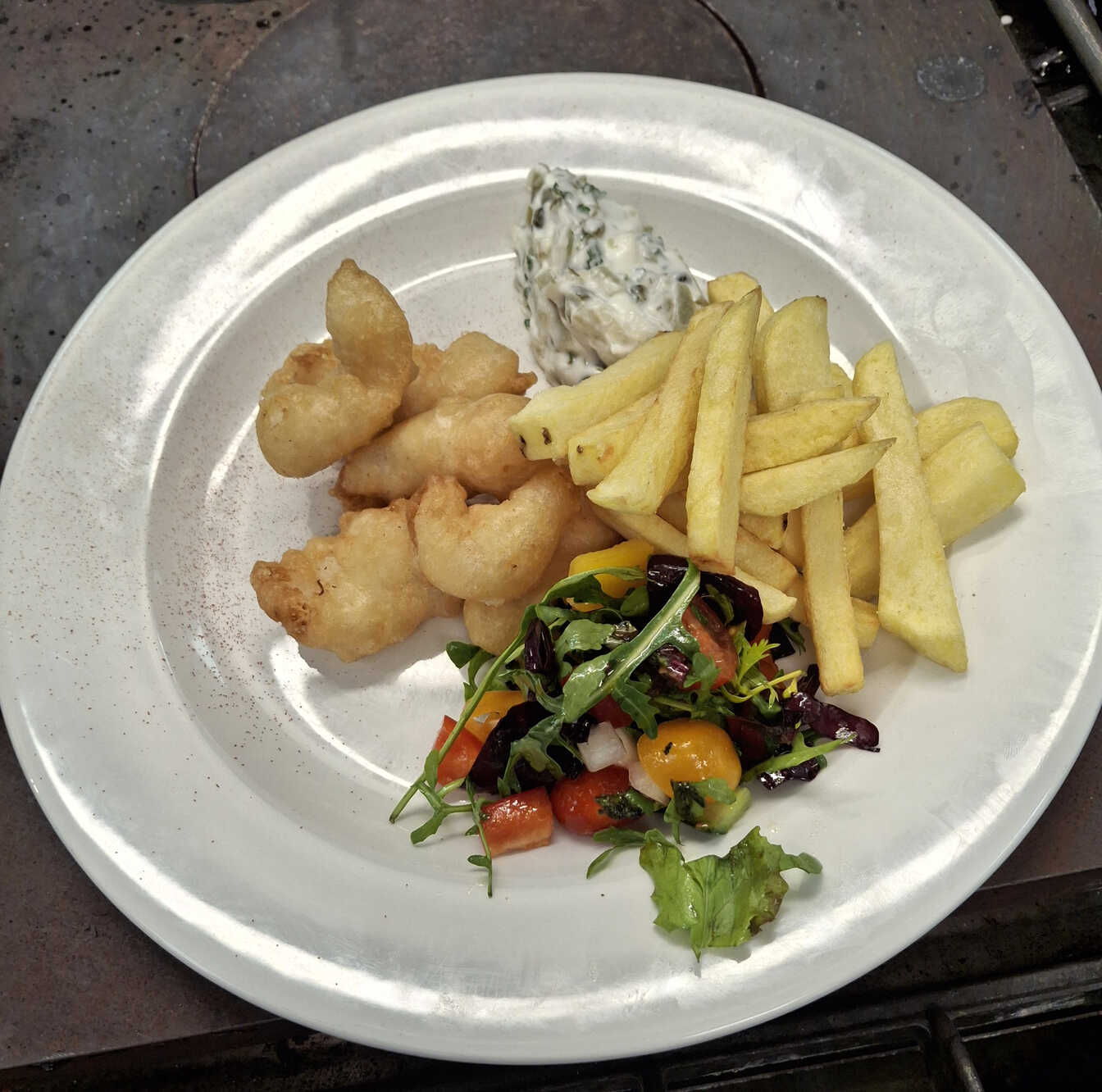
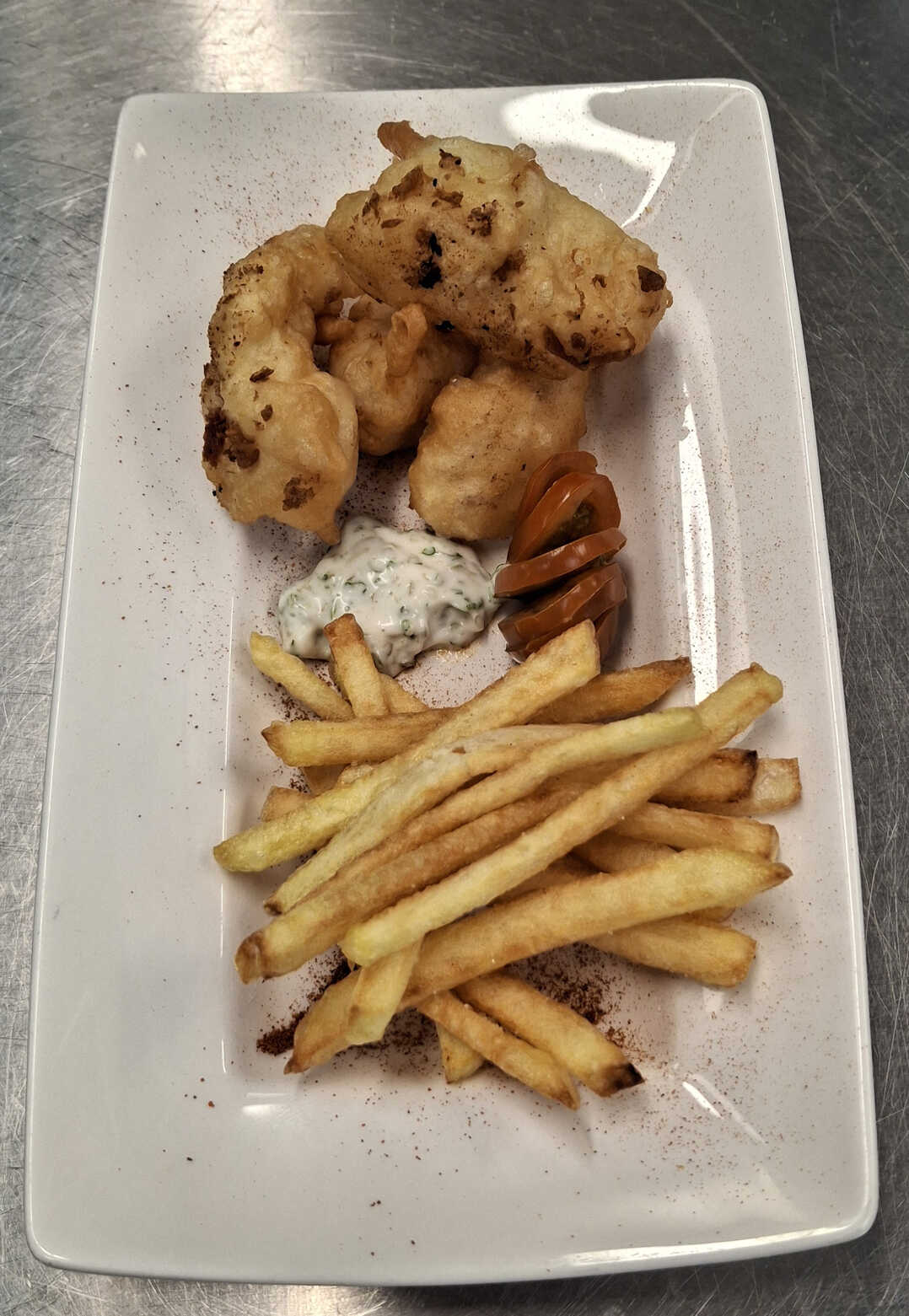
Scampi 'n' Chips
Battered Scampi
Battered Scampi
The real monk-fish-free, langoustiney deal.
Double-Cooked Chips
The essential carbohydrates.
Tartar Sauce
A classic accompaniment. Taste the seaside!
House Salad
Foliage. So you can pretend the meal is healthy.
Battered Scampi
class fish main
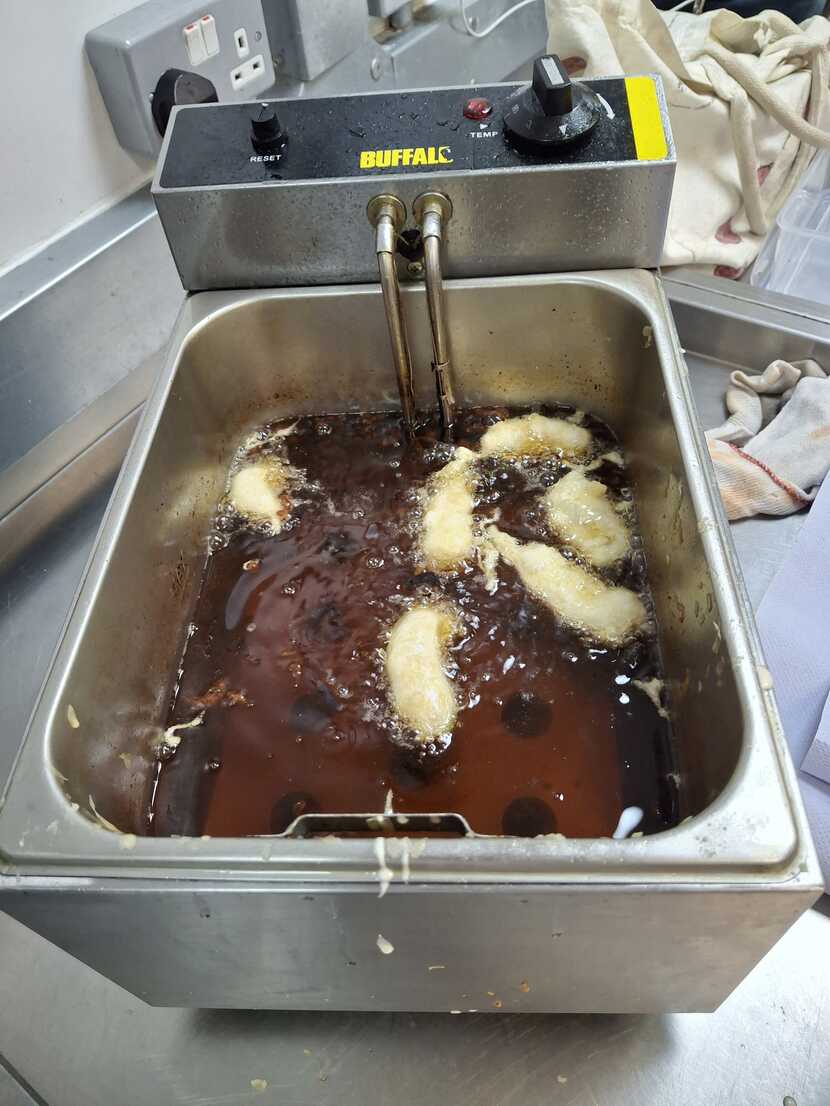
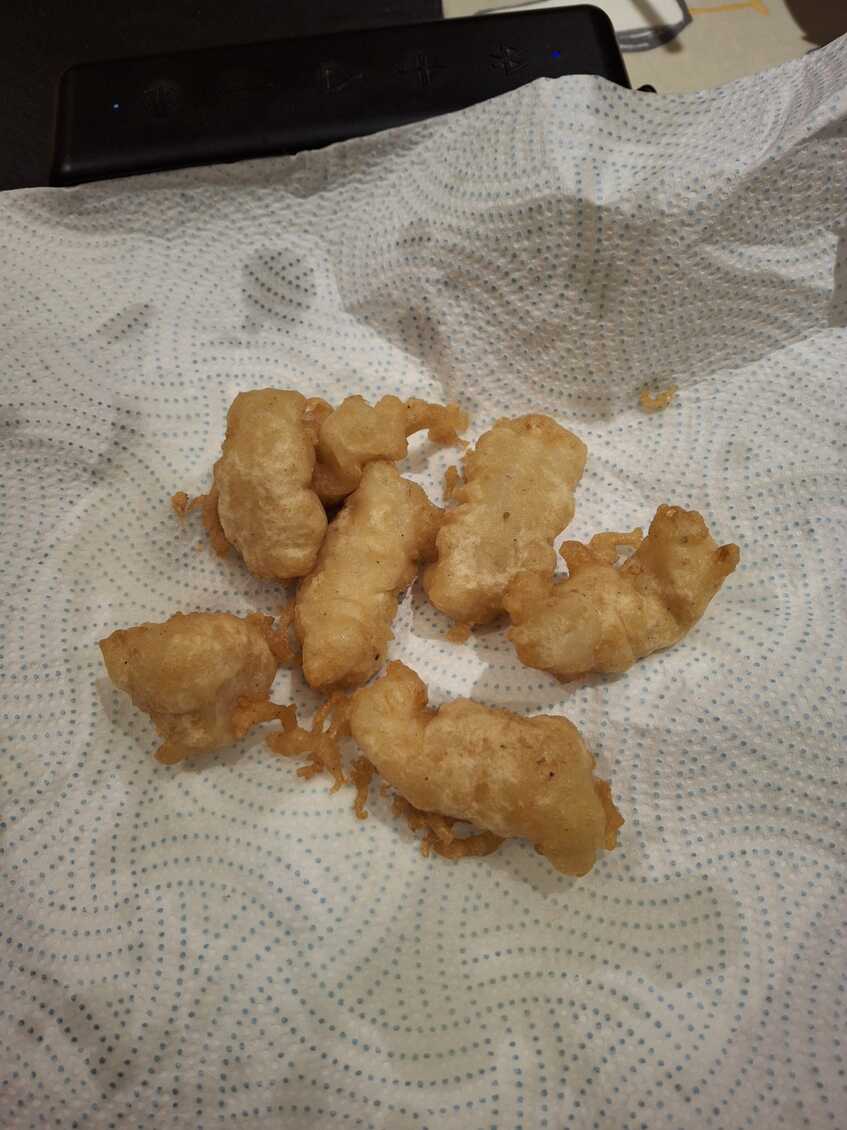
One way of producing a crispy airy batter is to induce bubbles into the mixture.
You can do this by incorporating bicarbonate of soda in the flour and adding some acid to the batter mixture to release the CO2.
Or you can add carbonated liquid, like soda water, sparkling water or beer.
It also helps to keep the batter and the fish very cold up until the point they hit the hot oil, the larger temperature difference generates more vapour which generates better batter expansion.
Some suggest adding vodka, which has such a low boiling point that it will bubble off early, also aerating the batter.
Adding a non-gluten flour to the mixture can also help (gluten can turn chewy) - cornflour or rice flour are popular additions.
Most commenters agree that coating the fish in flour (often flavoured or seasoned) can also help with keeping the batter dry and protected from steam produced by moist fish. It also helps batter to stick to the fish, though there is a risk of making the batter stodgy or claggy so be sure to shake off any excess flour.
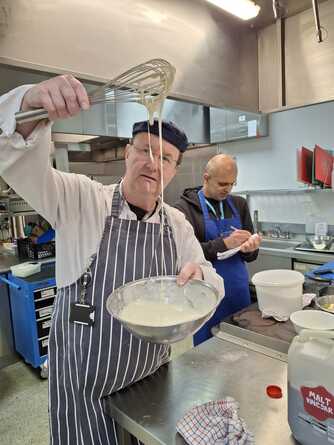
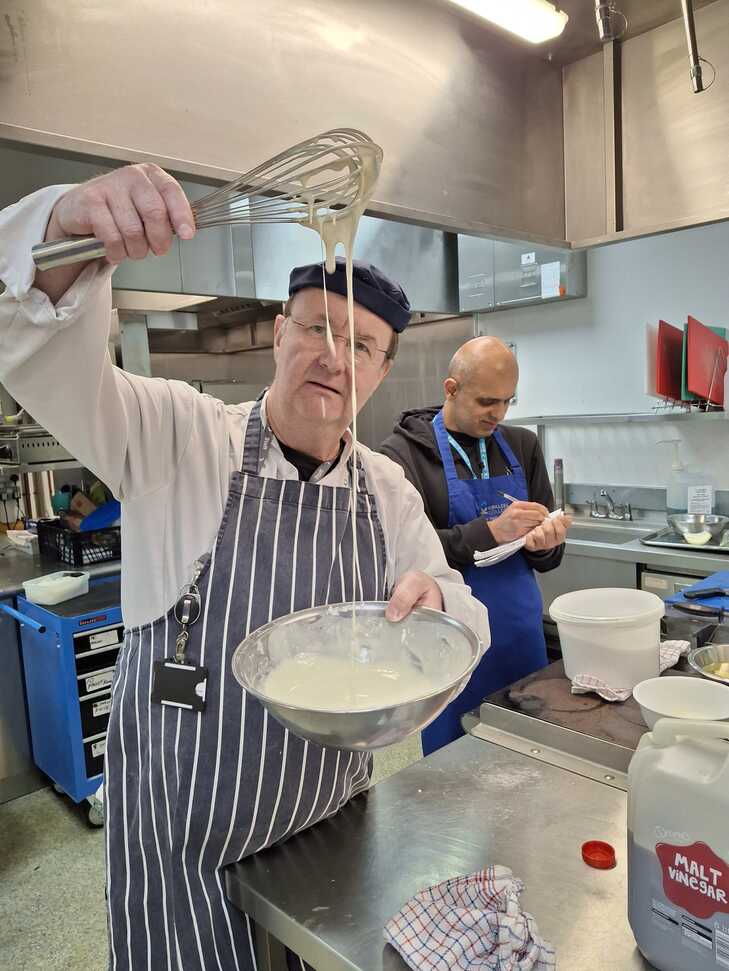
There is broad disagreement on the ideal thickness of your batter. Gary Rhodes is a firm advocate of thick batter, whilst Simon [Hopkinson]'s batter is so thin the extra flour is necessary to keep anything on the fish. It should at least be somewhere along the double-to-single-cream spectrum - Teacher Paul favours a very runny, drippy batter himself.
The general opinion for maintaining the crispness of your fried fish is to serve it immediately after frying, except for a very short draining process of a few seconds (some allow for 1-2 minutes). This should be done on a wire rack, rather than paper towels which can trap steam. Though to be honest I usually do use a paper towel.
If the fried fish needs to be held before serving, then this should be done uncovered on a wire rack in a low (150-165°C) oven.
Or you can add carbonated liquid, like soda water, sparkling water or beer.
It also helps to keep the batter and the fish very cold up until the point they hit the hot oil, the larger temperature difference generates more vapour which generates better batter expansion.
Some suggest adding vodka, which has such a low boiling point that it will bubble off early, also aerating the batter.
Adding a non-gluten flour to the mixture can also help (gluten can turn chewy) - cornflour or rice flour are popular additions.
Most commenters agree that coating the fish in flour (often flavoured or seasoned) can also help with keeping the batter dry and protected from steam produced by moist fish. It also helps batter to stick to the fish, though there is a risk of making the batter stodgy or claggy so be sure to shake off any excess flour.
There is broad disagreement on the ideal thickness of your batter. Gary Rhodes is a firm advocate of thick batter, whilst Simon [Hopkinson]'s batter is so thin the extra flour is necessary to keep anything on the fish. It should at least be somewhere along the double-to-single-cream spectrum - Teacher Paul favours a very runny, drippy batter himself.
The general opinion for maintaining the crispness of your fried fish is to serve it immediately after frying, except for a very short draining process of a few seconds (some allow for 1-2 minutes). This should be done on a wire rack, rather than paper towels which can trap steam. Though to be honest I usually do use a paper towel.
If the fried fish needs to be held before serving, then this should be done uncovered on a wire rack in a low (150-165°C) oven.
Serves 4
Ingredients
- 500—600g raw scampi or large prawns, peeled
- 150g self-raising flour
- 30g cornflour (optional, for extra crispness)
- 200—250 ml very cold sparkling water or beer
- Salt & white pepper
- Extra flour for dusting
- Oil for deep frying (sunflower/vegetable)
Prep the Scamp & Make the Batter:
Peel and De-vein the scampi tails.
Pat the scampi dry with kitchen paper so batter sticks.
Combine self-raising flour, cornflour, salt, white pepper.
Add very cold sparkling water gradually until batter is smooth and pourable.
Keep batter cold (over ice or in fridge).
Fry the Scampi:
Bring the oil to 175—180°C.
Lightly dust scampi in flour.
Dip into batter, let excess drip off.
Fry in small batches for 2—3 minutes until golden and crisp.
Troubleshooting PaulPointers™:
Peel and De-vein the scampi tails.
Pat the scampi dry with kitchen paper so batter sticks.
Combine self-raising flour, cornflour, salt, white pepper.
Add very cold sparkling water gradually until batter is smooth and pourable.
Keep batter cold (over ice or in fridge).
Fry the Scampi:
Bring the oil to 175—180°C.
Lightly dust scampi in flour.
Dip into batter, let excess drip off.
Fry in small batches for 2—3 minutes until golden and crisp.
Teacher Paul recommends using a slotted spoon or strainer to gently roll the scampi over so as to cook evenly once their batter has first crisped.
Drain and season lightly.
An interesting technique that Paul demonstrated was squeezing some lemon juice and salt in to a bowl and swirling the battered scampi around the bowl before serving to give them a light coating.
You'll need to serve immediately after you do this, though, or the batter will soften.
You'll need to serve immediately after you do this, though, or the batter will soften.
Troubleshooting PaulPointers™:
- Pale/greasy = oil too cool.
- Dark outside/undercooked inside = oil too hot.
Unfortunately there was no PaulPointer™ for Batter is soggy around the scampi.
The batter around the edges was crispy enough though.
I did go straight to battering the scampi without coating them in flour first, perhaps that would have helped. Perhaps I could have tried giving them a more purposeful squeeze to dry them out - since they were delivered swimming in water?
The batter around the edges was crispy enough though.
I did go straight to battering the scampi without coating them in flour first, perhaps that would have helped. Perhaps I could have tried giving them a more purposeful squeeze to dry them out - since they were delivered swimming in water?
Double-Cooked Chips
class veg vegan side staple
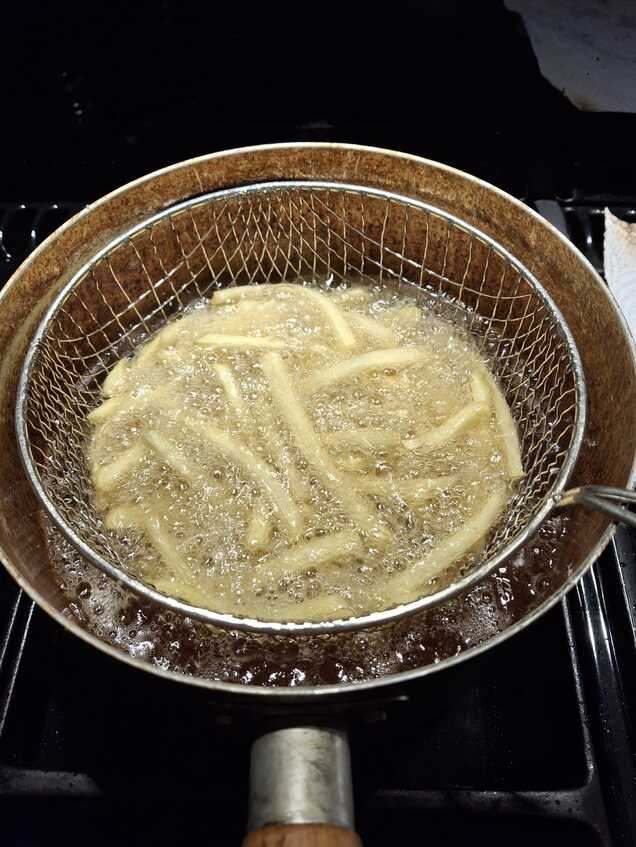
Double-cooking chips used to be the industry standard, until Heston came along with his fancypants triple-cook.
I decided to make thinner French fries, and from my chippy reading I tried out freezing mine in-between the initial and final fry. They were indeed super-crispy, as long as you don't attempt to make them too brown - they are so thin that they'll be just crisp rather than floury in the centre if you do that.
I also soaked my well-rinsed raw french fries in salted vinegared water (rather than boiling them) for an hour before the first frying, though it's hard to say if that actually made any difference.
I decided to make thinner French fries, and from my chippy reading I tried out freezing mine in-between the initial and final fry. They were indeed super-crispy, as long as you don't attempt to make them too brown - they are so thin that they'll be just crisp rather than floury in the centre if you do that.
I also soaked my well-rinsed raw french fries in salted vinegared water (rather than boiling them) for an hour before the first frying, though it's hard to say if that actually made any difference.
Serves 4
Ingredients
- 1.2—1.5 kg potatoes (Maris Piper or similar)
- Oil for frying
- Salt
Cut & Rinse:
Peel potatoes and cut into thick, even chips (about 1.5—2 cm).
Rinse under cold water to remove starch.
First Fry — Blanch:
Heat oil to 140°C. Many suggest 160°C.
Fry chips in small batches for 6—8 minutes until soft but pale.
Drain on paper and cool (fridge 10 minutes helps firm them).
Second Fry — Brown:
Heat oil to 180°C.
Fry blanched chips for 3—4 minutes until golden and crisp.
Drain and season with salt.
Keep warm in a low oven (80—100°C) while you fry the fish.
Peel potatoes and cut into thick, even chips (about 1.5—2 cm).
Rinse under cold water to remove starch.
You might prefer, as I did, to cut them into ¼"/6mm shoe-string fries instead.
First Fry — Blanch:
Heat oil to 140°C. Many suggest 160°C.
Fry chips in small batches for 6—8 minutes until soft but pale.
Drain on paper and cool (fridge 10 minutes helps firm them).
You can freeze the chips overnight or for months at this point for an even crispier result.
Just drop them in the second-fry oil straight from the freezer.
In any case the fries do need to rest and cool between frying stages.
In any case the fries do need to rest and cool between frying stages.
Second Fry — Brown:
Heat oil to 180°C.
Fry blanched chips for 3—4 minutes until golden and crisp.
Drain and season with salt.
Keep warm in a low oven (80—100°C) while you fry the fish.
In class we actually fried the fish first. But I prefer this suggestion - the fish will not be kept waiting.
Tartar Sauce
class salad sauce
Tartar sauce is basically mayonnaise mixed with pickles or condiments, though it began life in a simpler form.
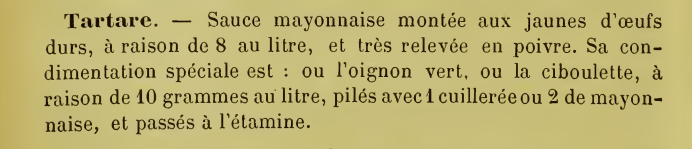
On page 164 of his seminal 1903 work Le Guide Culinaire Escoffier describes Sauce Tartare as simply
Most English tartar sauce today will consist of mayonnaise with at least parsley, capers, and gherkin or cornichons chopped into it.
Often with a little Dijon mustard and white wine vinegar too. Sometimes more adventurous herbs such as tarragon or chives are included.
In America they will often add minced shallots and a dash of hot sauce.
Feel free to sweeten your tartar with a little sugar, spice it up with white pepper, or enrich it with a little cream or crème fraîche - Hungarian style.
If you keep adding mixed herbs and things like mustard, anchovies, garlic, curry powder, paprika, cayenne or horseradish then what you are now making is a remoulade sauce.
On page 164 of his seminal 1903 work Le Guide Culinaire Escoffier describes Sauce Tartare as simply
Mayonnaise sauce made with hard-boiled egg yolks, at a rate of 8 per liter, and very peppery.
Its special seasoning is: either green onion or chives, at a rate of 10 grams per liter, crushed with 1 or 2 tablespoons of mayonnaise, and passed through a sieve.
Most English tartar sauce today will consist of mayonnaise with at least parsley, capers, and gherkin or cornichons chopped into it.
Often with a little Dijon mustard and white wine vinegar too. Sometimes more adventurous herbs such as tarragon or chives are included.
In America they will often add minced shallots and a dash of hot sauce.
Feel free to sweeten your tartar with a little sugar, spice it up with white pepper, or enrich it with a little cream or crème fraîche - Hungarian style.
If you keep adding mixed herbs and things like mustard, anchovies, garlic, curry powder, paprika, cayenne or horseradish then what you are now making is a remoulade sauce.
Serves 4
Ingredients
- 200g mayonnaise
- 1 tbsp capers, finely chopped
- 2 gherkins, finely chopped
- Small handful parsley, finely chopped
- 1 tsp Dijon mustard
- 1—2 tsp lemon juice
- Salt & pepper
Chop aromatics: capers, gherkins, parsley (fine and even).
Mix: mayonnaise + chopped ingredients + mustard + lemon juice + seasoning.
Taste & adjust: more lemon for acidity, more herbs for freshness.
Refrigerate to develop flavour.
Mix: mayonnaise + chopped ingredients + mustard + lemon juice + seasoning.
Taste & adjust: more lemon for acidity, more herbs for freshness.
Refrigerate to develop flavour.
This turned out a bit oily, if I'm honest. I think that might be the relatively poor quality of the class mayonnaise.
I would also personally prefer rather less gherkin, and rather more capers than the amounts above. Perhaps it meant cornichons?
I would also personally prefer rather less gherkin, and rather more capers than the amounts above. Perhaps it meant cornichons?
Classic Vinaigrette
class salad dressing
The classic vinaigrette ratio is 3 parts oil to 1 part vinegar. If you substitute lemon juice you will probably want to decrease the relative quantity of oil.
Serves 4
Ingredients
- 1 tbsp white wine vinegar or lemon juice
- 3 tbsp olive oil
- ½ tsp Dijon mustard
- Pinch salt & pepper
- ½ tsp honey or sugar (optional)
Mix vinegar/lemon + mustard + salt + pepper + honey.
Slowly whisk in oil until lightly thickened.
Taste and adjust balance.
Dress salad lightly with vinaigrette (leaves should glisten, not drip).
Slowly whisk in oil until lightly thickened.
Taste and adjust balance.
Dress salad lightly with vinaigrette (leaves should glisten, not drip).
Yep. It's a vinaigrette alright.
Cookery Class House Salad
class salad
Included for completion. If you aren't sure what a salad is.
Although ours also included bell peppers. So perhaps no-one knows what a salad is?
Although ours also included bell peppers. So perhaps no-one knows what a salad is?
Serves 4
Ingredients
- 150—200g mixed salad leaves
- ½ cucumber, deseeded & sliced
- 150g cherry tomatoes, halved
- ½ small red onion, finely sliced
Optional extras:- radishes
- grated carrot
- peppers
Wash and dry leaves thoroughly.
Slice cucumber, tomatoes, onion, and any extras.
Arrange in a bowl undressed until serving.
Slice cucumber, tomatoes, onion, and any extras.
Arrange in a bowl undressed until serving.
You can decide how chunky you want it.
Scampi Scampi
fish pasta main
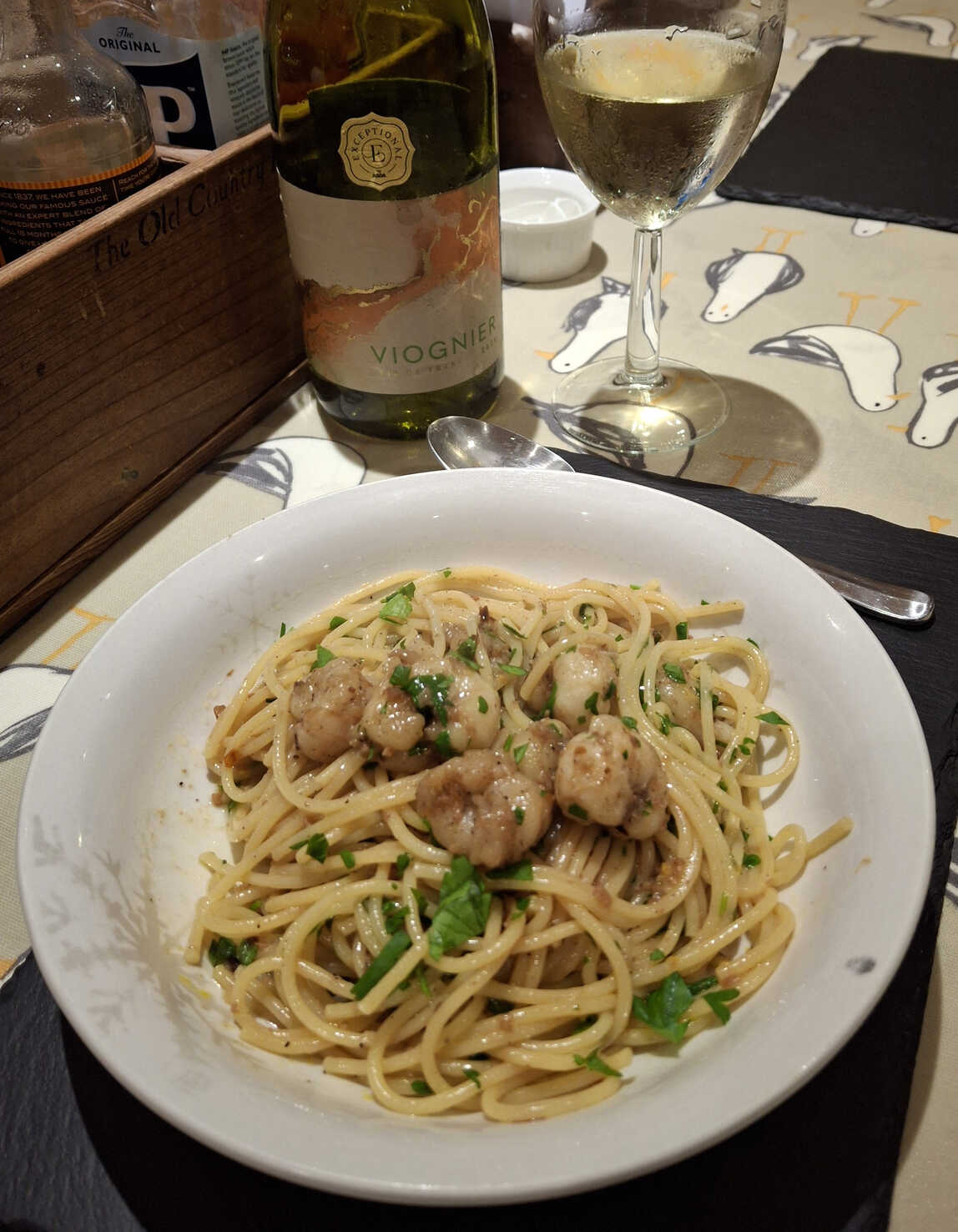
See, in America-Land, the term scampi just means Cooked in the Italian Scampi Style - with olive oil (naturally), garlic, white wine and lemon juice.
There you will often find absurdities such as shrimp scampi on the menu. But I had actual langoustines.
Hence Scampi scampi.
There you will often find absurdities such as shrimp scampi on the menu. But I had actual langoustines.
Hence Scampi scampi.
Serves 4
Ingredients
- 1lb / 450g langoustines, peeled, de-veined
- 8 tblsps / 120ml olive oil
- 6 tblsps / 85g butter
- large pinch chilli flakes
- 10 cloves garlic, minced
- ¼ tsp baking soda
- ¾ cup / 180ml white wine or Vermouth
- 1 cup herbs - parsley, tarragon, chives, chervil etc. chopped
- 1 lemon juice and zest
- salt & pepper
Accompaniment:- 1 lb / 450g pasta or crusty bread
Peel the langoustines, cut away the intestine full of poo that runs along their backs, and season with a good dose of pepper, some salt, and just a little bicarbonate of soda.
Toss and leave to stand for 10-60 minutes.
Add a glass of white wine, or vermouth, or both and bubble until reduced by two thirds, then whisk in the butter one knob at a time until you have an emulsified sauce.
Return the langoustines to the pan and swirl them around to coat in the sauce.
Add lemon juice, grated lemon zest, chopped parsley, and then add the cooked pasta if using - in which case spaghetti or linguine would be typical along with a little of the pasta water.
Mix together and serve.
You decorate with more lemon juice, olive oil, parsley and even some grated cheese if you must.
Toss and leave to stand for 10-60 minutes.
Apparently the soda will help to keep the shellfish plump and tender.
Heat a generous puddle of olive oil until shimmering and quickly fry the langoustines until they turn a little golden in spots and are just cooked through.
If they're curled up into a C-shape like a terrified embryo, then you've overcooked them!
Scoop out the langoustines and set aside.
Add more olive oil if required, then add the chilli flakes, then the minced garlic and sweat until the garlic turns golden. Careful not to burn it.Add a glass of white wine, or vermouth, or both and bubble until reduced by two thirds, then whisk in the butter one knob at a time until you have an emulsified sauce.
Return the langoustines to the pan and swirl them around to coat in the sauce.
Add lemon juice, grated lemon zest, chopped parsley, and then add the cooked pasta if using - in which case spaghetti or linguine would be typical along with a little of the pasta water.
Mix together and serve.
You decorate with more lemon juice, olive oil, parsley and even some grated cheese if you must.
Not the most exciting pasta dish, frankly, although I may have begun with too much oil and reduced the wine too hard so the final sauce was very greasy.