Introduction to Bistro Cookery - Darne that Fish!
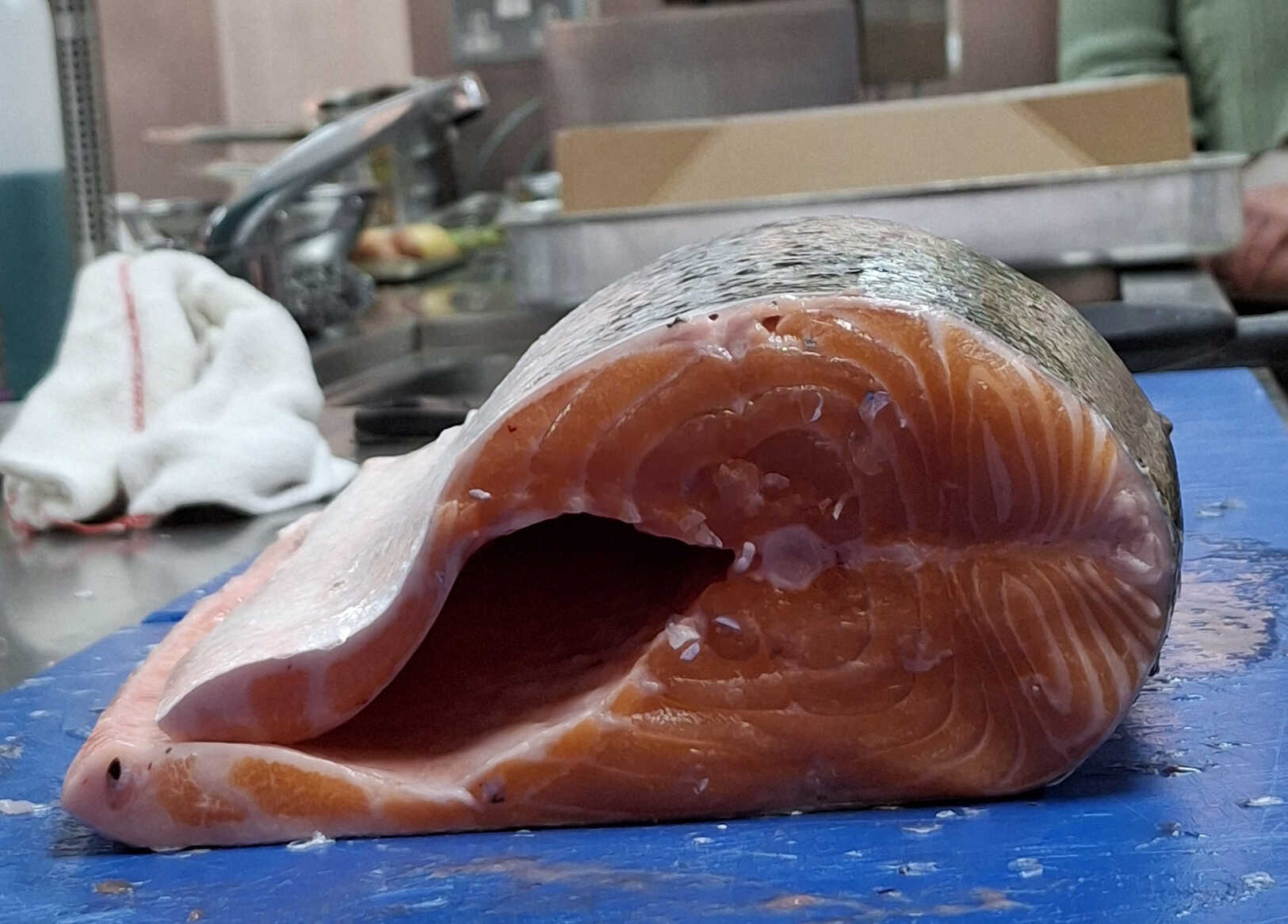
In which I learn the term darne for fish steaks cut as cross-sections through the body of a round fish.
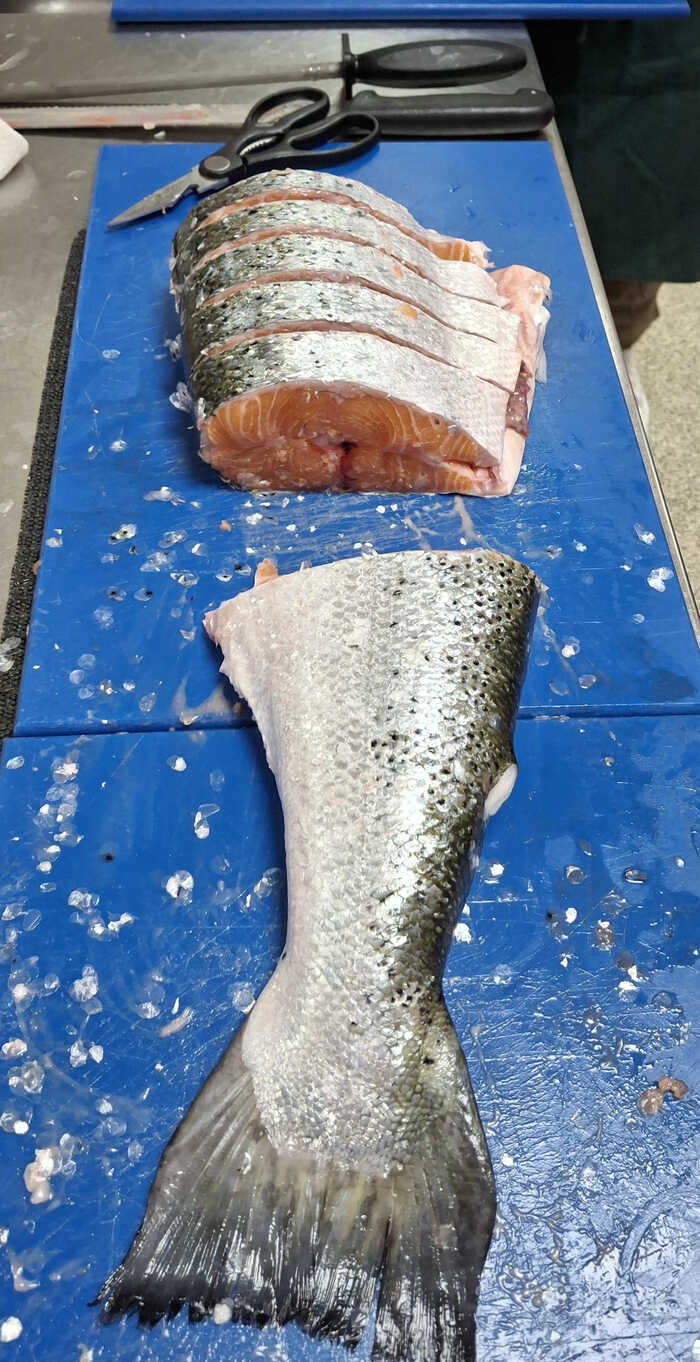
It produces cuts with quite different characteristics from boneless fillets, cut longitudinally from the fish. Cooking portions with the bones still in them produces a more complex flavour.
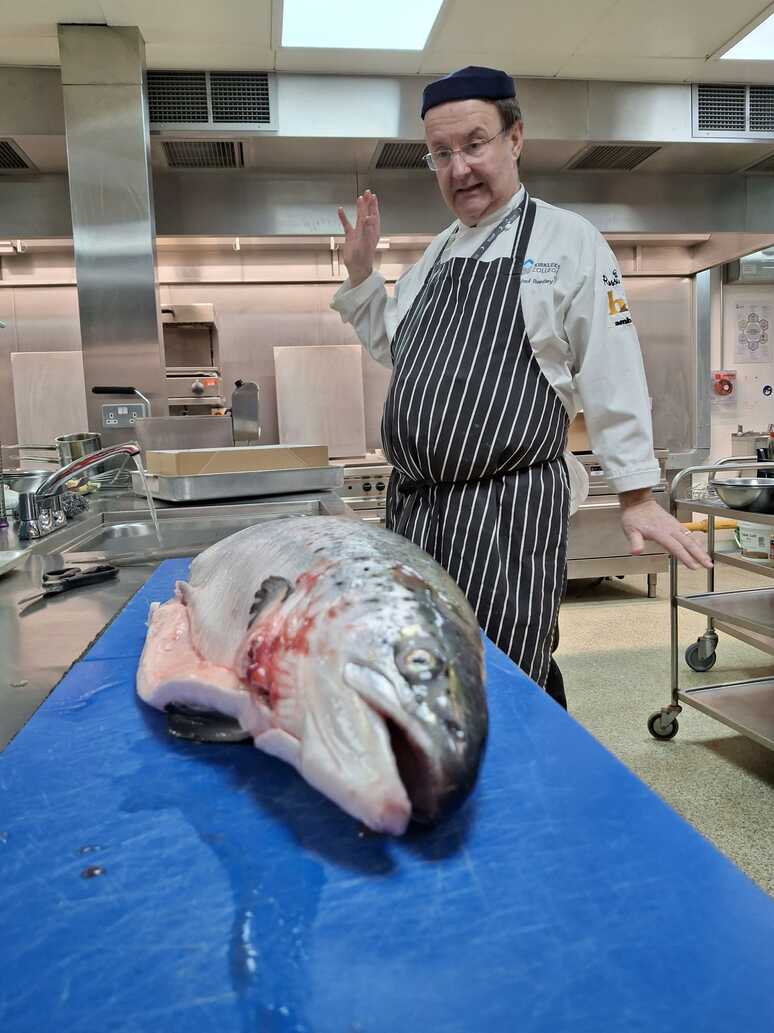
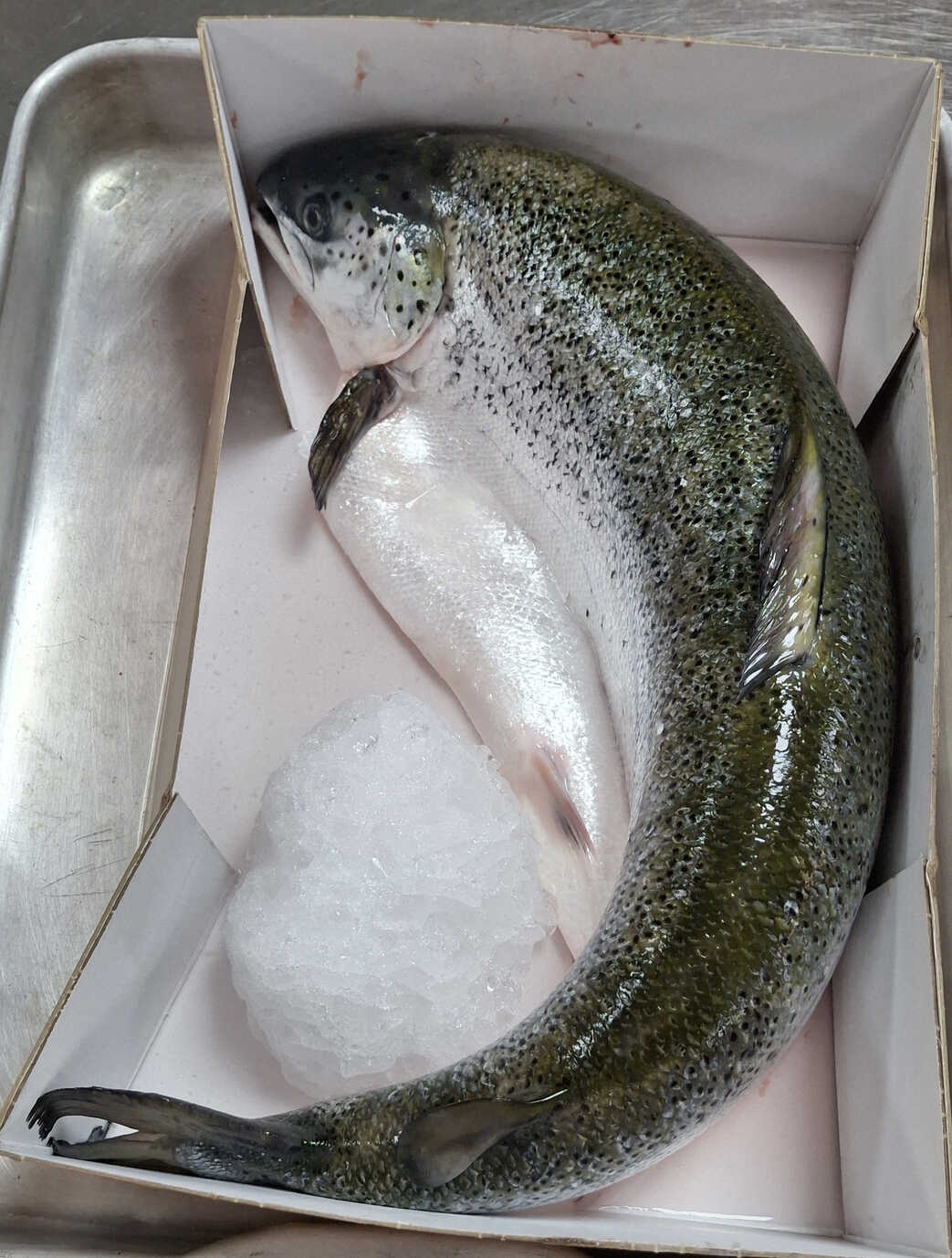
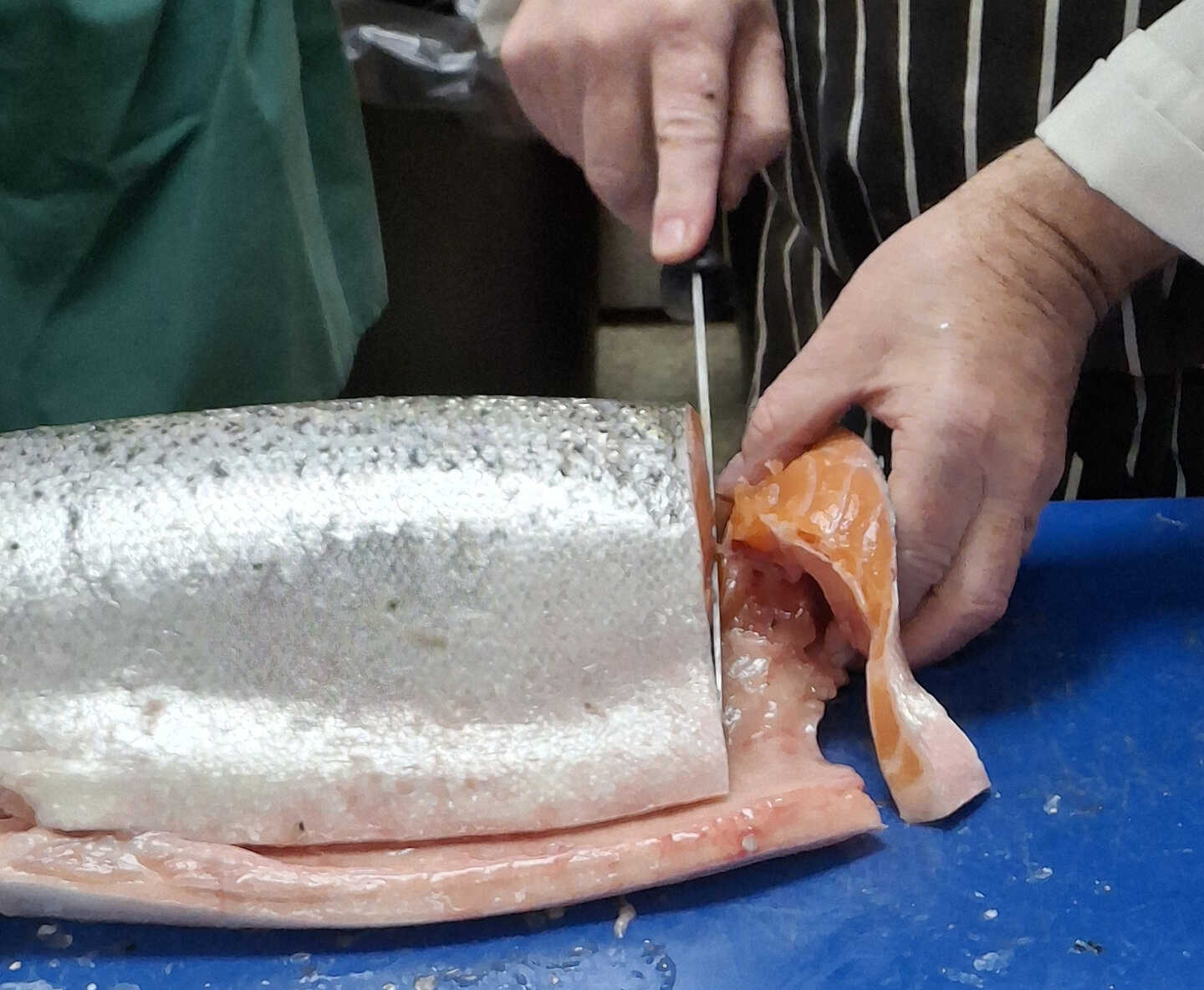
The class was blessed with a whole salmon to play with, so after gutting, de-finning and scaling it, Teacher Paul set to cutting it into segments (darnes) for us - using a sharp knife to cut the flesh and a bread knife to quickly saw through the spine.
It produces cuts with quite different characteristics from boneless fillets, cut longitudinally from the fish. Cooking portions with the bones still in them produces a more complex flavour.
The class was blessed with a whole salmon to play with, so after gutting, de-finning and scaling it, Teacher Paul set to cutting it into segments (darnes) for us - using a sharp knife to cut the flesh and a bread knife to quickly saw through the spine.
menu
BIG Fish
Grilled Salmon Steaks
Grilled Salmon Steaks
Darne good fish.
Hollandaise Sauce
Rich and buttery.
There's a lot of butter in this dish.
Glazed VegetablesThere's a lot of butter in this dish.
Carrots and New Potatoes: Glazed.
With butter - what else?
AsparagusWith butter - what else?
The token greenery.
Unless they're white asparagus.
Unless they're white asparagus.
Grilled Salmon Steaks
class main fish
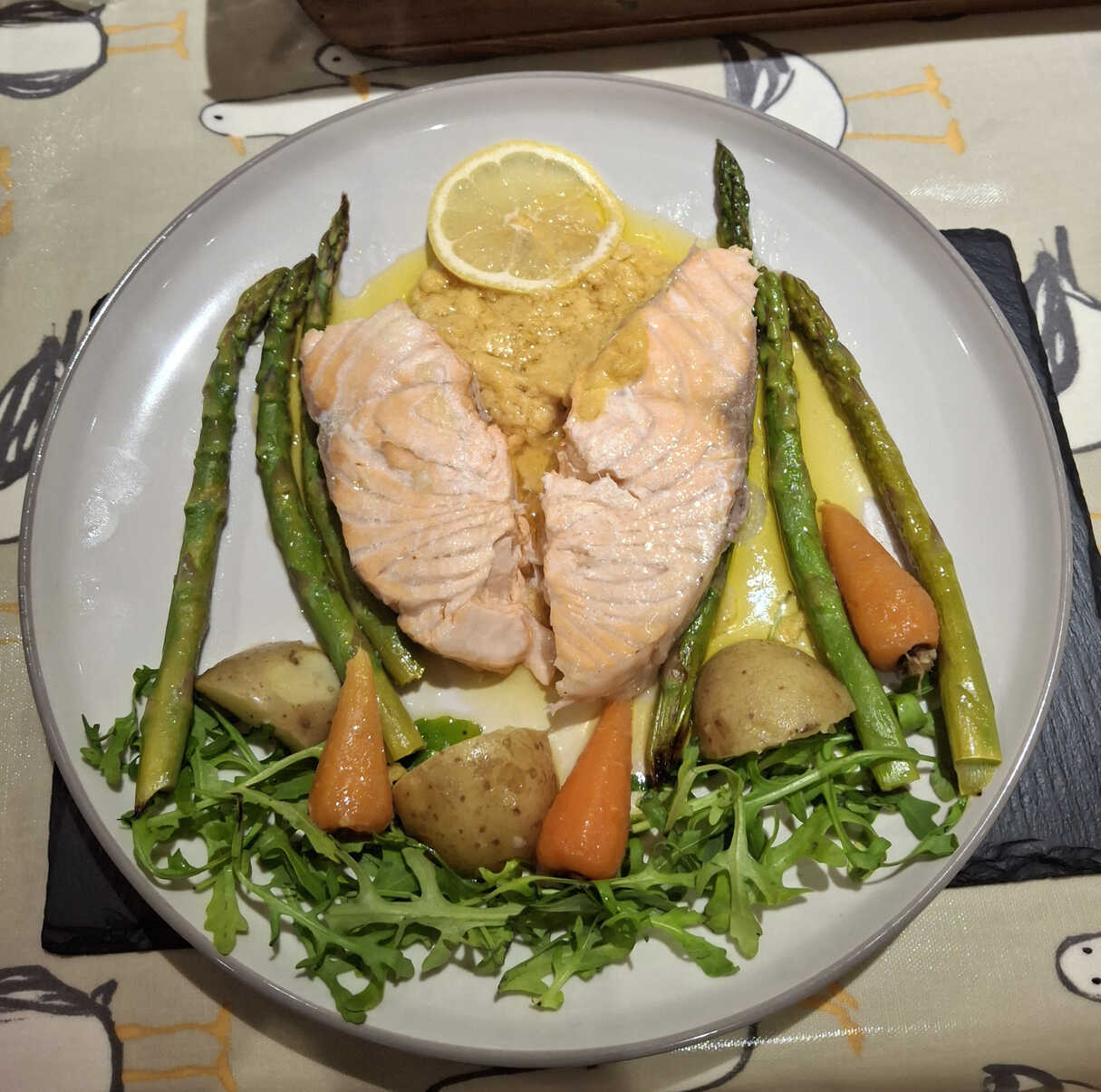
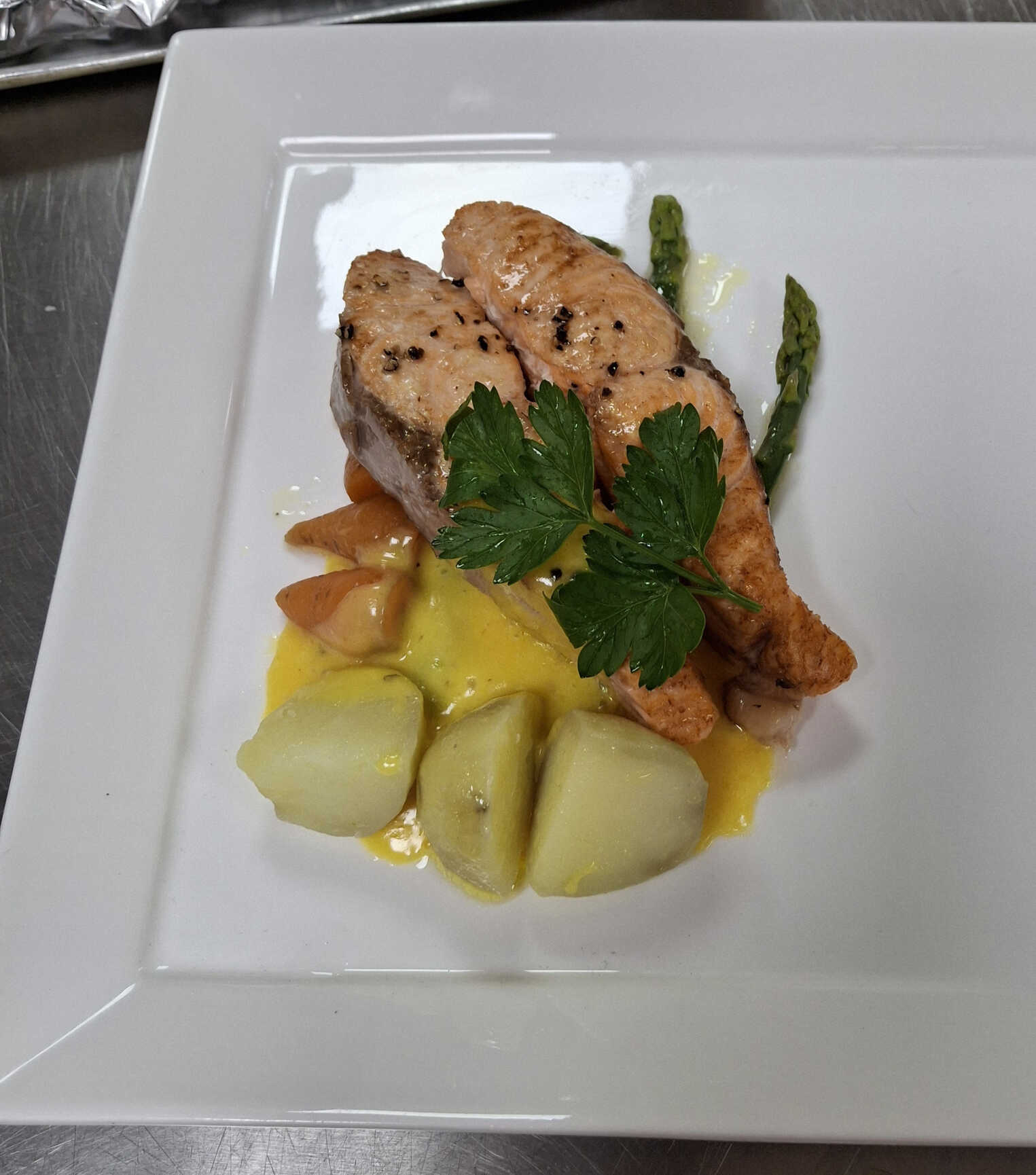
Grilling gives the salmon a crisp finish and rich flavour. Particularly from still having the bones left inside.
However, because the skin runs along the sides of the steak you will not get a crispy skin the way you would from a fillet.
However, because the skin runs along the sides of the steak you will not get a crispy skin the way you would from a fillet.
Serves One
Ingredients
- 1 salmon steak (150-180g)
- butter
- salt & pepper
Preheat the Grill: Set to medium-high heat and allow to warm for 5 minutes.
Pat the salmon dry with kitchen paper.
Brush lightly with oil or melted butter.
Season with salt and pepper.
Place salmon on the grill. Cook for 4-5 minutes on the first side. Turn carefully and cook for another 3-4 minutes until:
It's best to serve without the skin, and to remove the vertebrae and any remaining small bones:
Take a fork and slip one of the tines inside one of the ends the skin running around the fish. Roll up the skin with the fork, as if opening one of those old-fashioned keyed cans of sardines, to remove it completely.
Stab the large vertibral bone with a fork tine and work it loose from the fish, also dragging out any bones from the cleft above the steak's spine.
Now run the fork along the insides of the belly flaps to scrape away any tiny bones from there too.
If you prefer you can separate the two fillet halves of the darne completely and scrape all the bones from between them.
Pat the salmon dry with kitchen paper.
Brush lightly with oil or melted butter.
Season with salt and pepper.
Place salmon on the grill. Cook for 4-5 minutes on the first side. Turn carefully and cook for another 3-4 minutes until:
- Flesh is opaque
- It flakes away from the bone easily
- The juices run clear
It's best to serve without the skin, and to remove the vertebrae and any remaining small bones:
Take a fork and slip one of the tines inside one of the ends the skin running around the fish. Roll up the skin with the fork, as if opening one of those old-fashioned keyed cans of sardines, to remove it completely.
Stab the large vertibral bone with a fork tine and work it loose from the fish, also dragging out any bones from the cleft above the steak's spine.
Now run the fork along the insides of the belly flaps to scrape away any tiny bones from there too.
If you prefer you can separate the two fillet halves of the darne completely and scrape all the bones from between them.
Hollandaise Sauce
class sauce
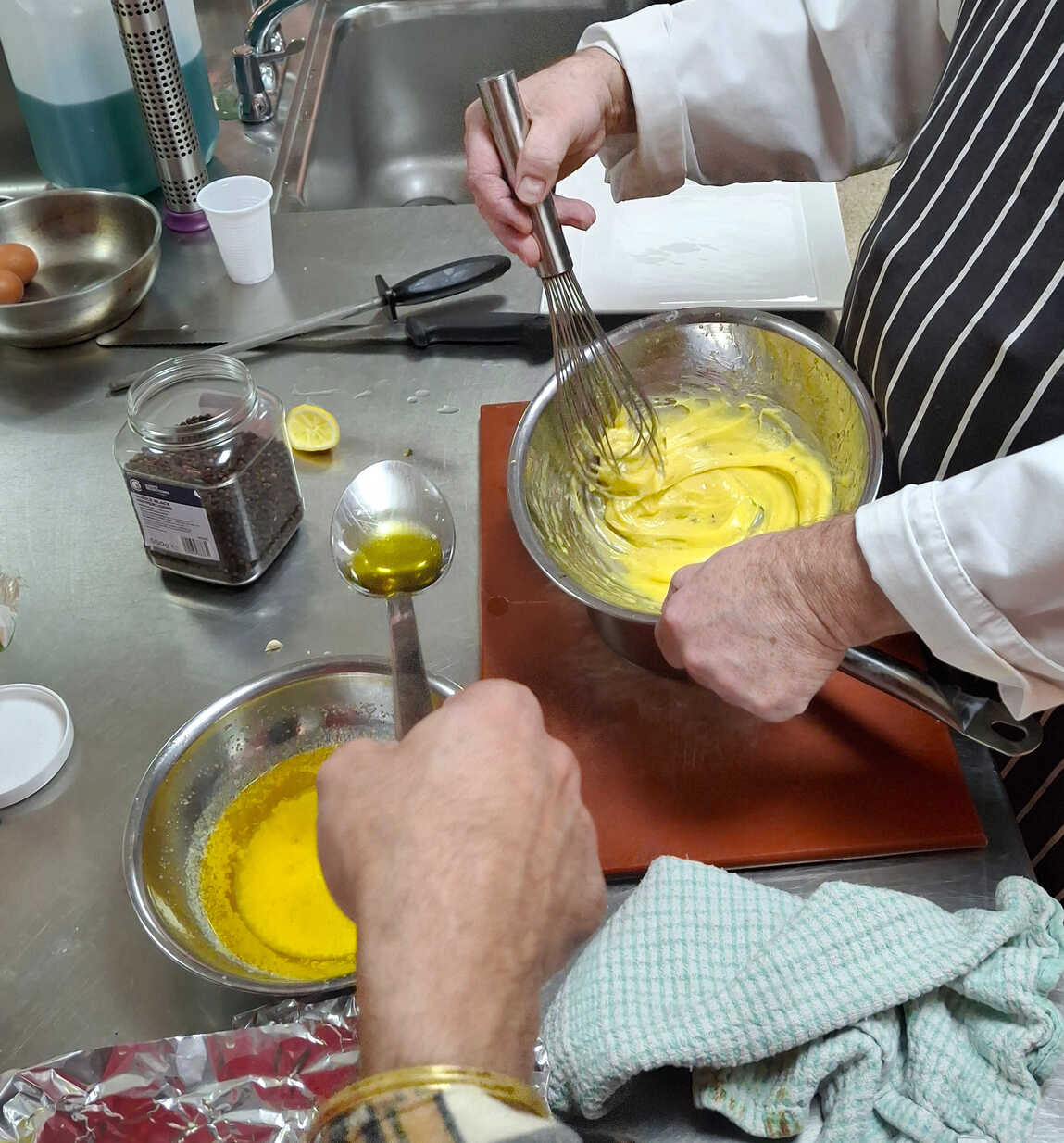
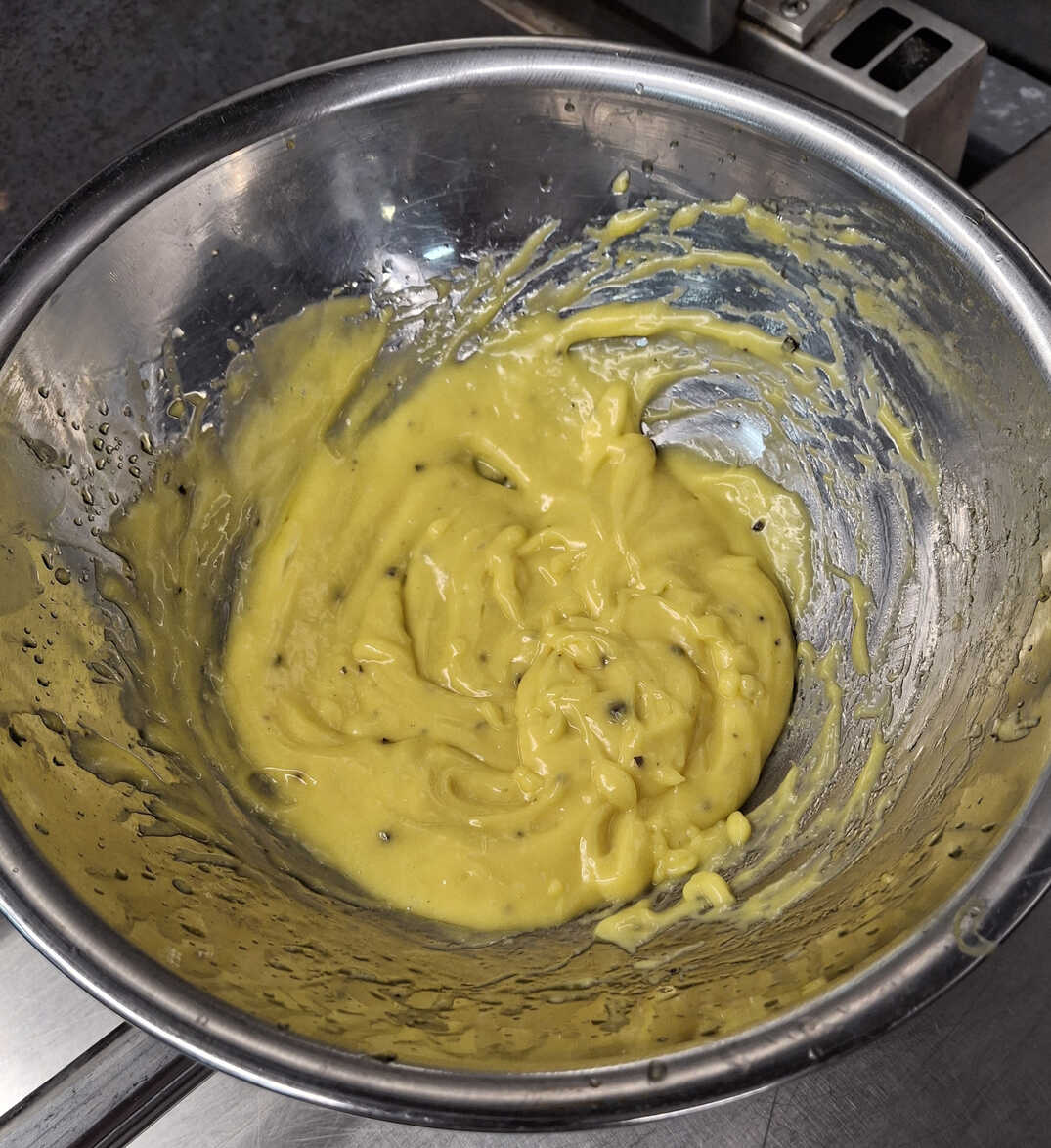
It's much harder to make hollandaise or its close relative béarnaise in smaller quantities.
Which is why in class we used two or three egg yolks.
We also used a vinegar and cracked pepper reduction in addition to lemon juice to flavour our sauce turning it more nearly into béarnaise.
It's notoriously difficult to keep hollandaise warm for any period of time, or reheat it without it splitting. If this happens while you're making it you may be able to bring it back by vigourously beating in a small amount of hot water, or by gradually whisking in a fresh egg yolk.
Despite online assurances that it is possible to reheat cold hollandaise by microwaving on very low power and regularly beating it, I didn't have any success with it myself.
Another source suggests that you can very effectively stabilise the sauce by adding xantham gum, allowing safe reheating, but I have yet to try that out.
Adding some Dijon mustard can also help to emulsify the sauce, but of course this changes the flavour profile.
We also used a vinegar and cracked pepper reduction in addition to lemon juice to flavour our sauce turning it more nearly into béarnaise.
It's notoriously difficult to keep hollandaise warm for any period of time, or reheat it without it splitting. If this happens while you're making it you may be able to bring it back by vigourously beating in a small amount of hot water, or by gradually whisking in a fresh egg yolk.
Despite online assurances that it is possible to reheat cold hollandaise by microwaving on very low power and regularly beating it, I didn't have any success with it myself.
Another source suggests that you can very effectively stabilise the sauce by adding xantham gum, allowing safe reheating, but I have yet to try that out.
Adding some Dijon mustard can also help to emulsify the sauce, but of course this changes the flavour profile.
Serves One
Ingredients
- 1 egg yolk
- 1 tbsp white wine vinegar or lemon juice
- 50-60g melted butter
- black peppercorns, crushed
- Salt & pepper
Melt the butter gently.
In a heatproof bowl, whisk together the egg yolk and the vinegar or lemon juice
Place the bowl over a pan of gently simmering water. Whisk continuously until slightly thickened.
Slowly drizzle in the melted butter while whisking.
Season with salt, pepper, and lemon juice to taste.
Tip: If it thickens too much, whisk in a teaspoon of warm water.
If you prefer, you can allow the butter to clarify and use only the butter fat which floats above the milk liquids and solids.
Crush black or white! peppercorns and simmer with the vinegar if using until reduced by half.In a heatproof bowl, whisk together the egg yolk and the vinegar or lemon juice
Place the bowl over a pan of gently simmering water. Whisk continuously until slightly thickened.
Slowly drizzle in the melted butter while whisking.
Season with salt, pepper, and lemon juice to taste.
Tip: If it thickens too much, whisk in a teaspoon of warm water.
Easy to get wrong.
Delicious when right.
Delicious when right.
Asparagus
class side veg
Serves OneIngredients
- 4-6 asparagus stalks
Snap off the asparagus spears' woody ends.
Steam or boil for 3-4 minutes until bright green and tender.
Refresh in cold water if preparing ahead.
Steam or boil for 3-4 minutes until bright green and tender.
Refresh in cold water if preparing ahead.
Great with hollandaise sauce!
You can peel the stalks if they're particularly fibrous.
You can peel the stalks if they're particularly fibrous.
Glazed New Potatoes
class veg side
We cooked the Chantenay carrots along with our new potatoes.
Serves One
Ingredients
- 150g new potatoes
Rinse the potatoes well.
Place in a saucepan, cover with cold water, add salt.
Bring to the boil, then simmer 15-20 minutes until tender.
Drain and keep warm. Glaze in hot butter to serve.
Place in a saucepan, cover with cold water, add salt.
Bring to the boil, then simmer 15-20 minutes until tender.
Drain and keep warm. Glaze in hot butter to serve.
It's fine. You might throw in some herbs - mint, coriander, thyme, or tarragon, say.
Carrots Vichy
class side
The origin legend I have just invented has it that patients of the Vichy clinic and hot water spa,
subsisting on a diet of raw carrots and celery, were wont to take their carrots into the hot baths with them to nibble on.
They discovered that the warm, sweaty spa waters imbued their carrots with a particularly delicious flavour - and thus were Carrots Vichy born!
The modern iteration gently sweats carrots in water with a little bicarbonate of soda added to recreate the alkaline spa waters, and some sugar to take away the horrible chalky bicarb flavour.
Anyway, we didn't actually make any vichy carrots, going for just glazing Chantenay carrots in butter, but they were part of the original meal plan.
You can easily enhance this recipe by using honey instead of sugar, adding spices (cumin or star anise is nice), herbs (thyme is common), including a splash of sherry vinegar, or using orange juice as the cooking liquid.
They discovered that the warm, sweaty spa waters imbued their carrots with a particularly delicious flavour - and thus were Carrots Vichy born!
The modern iteration gently sweats carrots in water with a little bicarbonate of soda added to recreate the alkaline spa waters, and some sugar to take away the horrible chalky bicarb flavour.
Anyway, we didn't actually make any vichy carrots, going for just glazing Chantenay carrots in butter, but they were part of the original meal plan.
You can easily enhance this recipe by using honey instead of sugar, adding spices (cumin or star anise is nice), herbs (thyme is common), including a splash of sherry vinegar, or using orange juice as the cooking liquid.
Serves One
Ingredients
- 80-100g Chantenay carrots
- butter
- sugar
- bicarbonate of soda optional
Wash the carrots thoroughly (no need to peel).
Place in a pan with a little water, a knob of butter, and a pinch of sugar.
Cover and simmer 10-12 minutes until tender and glazed.
Place in a pan with a little water, a knob of butter, and a pinch of sugar.
Cover and simmer 10-12 minutes until tender and glazed.
Quite good - though the carrots are more usually julienned so they absorb more flavour and glaze.
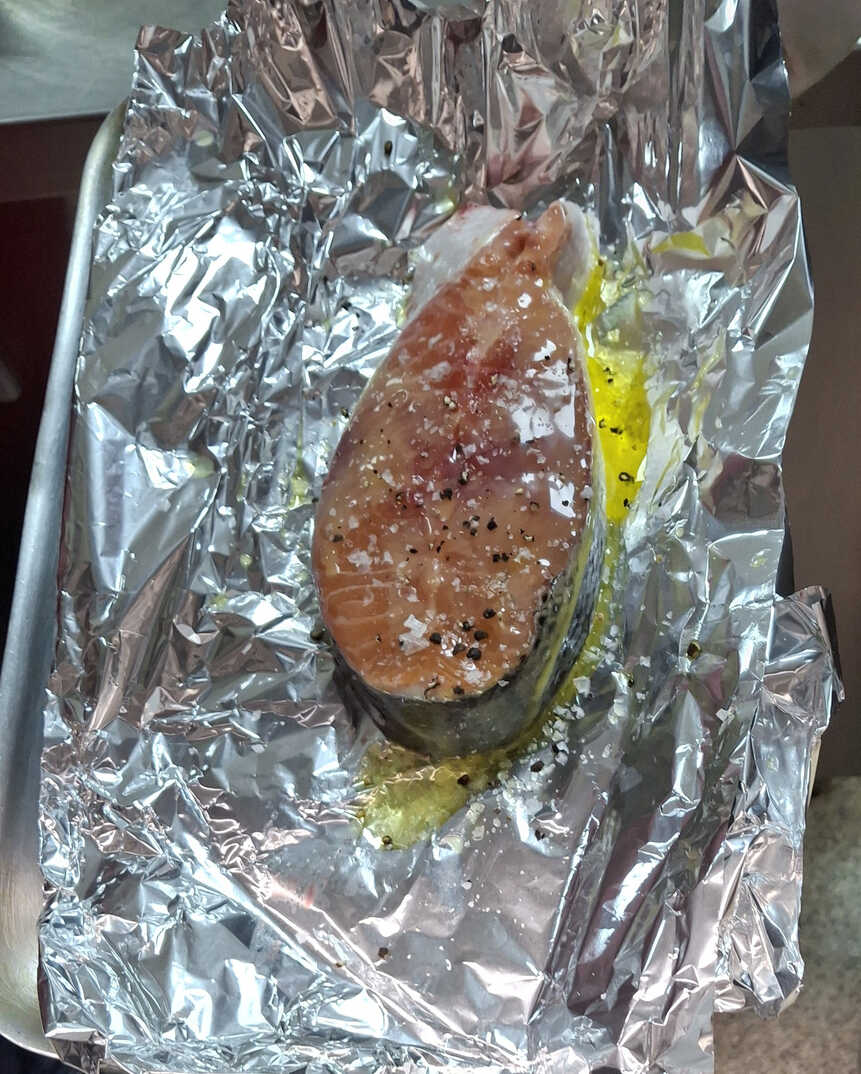
Alternatively you can cook the steak en papillotte in a very hot oven. You can include asparagus spears and lemon slices in the package.